
REVIEW · MADRID
Italian Prado Museum Tour | Maximum 7 people | No line
The best thing about this Prado visit is its small Italian-speaking format. In 90 minutes, you move from the Renaissance to Romanticism, with major works by Bosch, Velázquez, Goya, Rubens, Titian, and El Greco. The tour also includes entry, so you are not left sorting out the museum ticket on your own.
I like the clear focus on the museum’s masterpieces, especially Las meninas, and I like the strong guide presence. Stefania is repeatedly described as prepared, engaging, smiling, and able to keep the visit lively without making it feel like a classroom. The main point to check is group size: the title promises a maximum of seven, while the additional booking information lists a maximum of 20.
Key points to know before booking
- Italian-language tour: The visit is designed for Italian speakers, not as a multilingual museum walk.
- A focused 90-minute route: You cover major works from the Renaissance through Romanticism without trying to see every gallery.
- No-line entry included: Your admission ticket is part of the booking.
- Stefania receives especially warm praise: Her clear explanations, humor, and friendly manner are a major part of the experience.
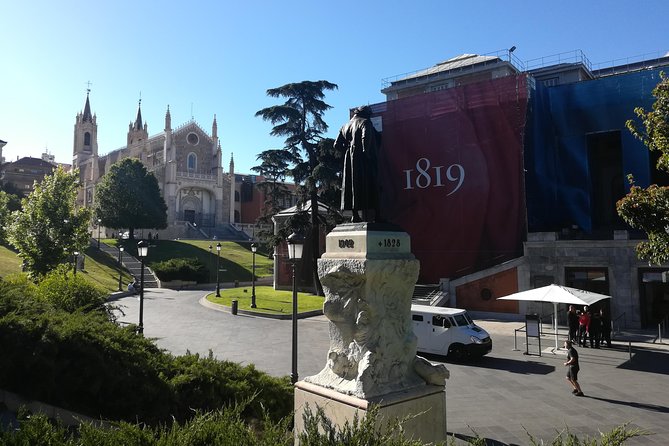
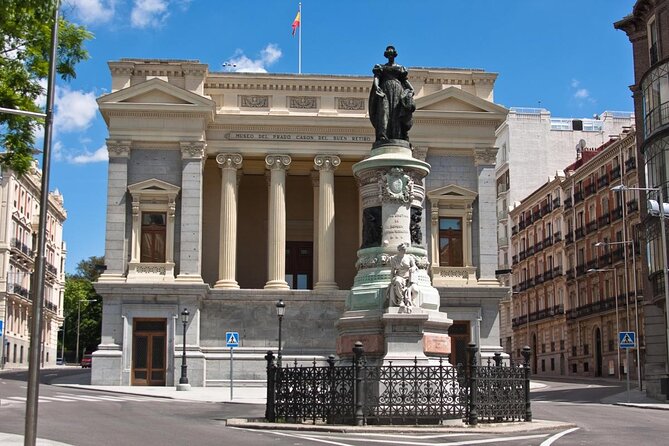
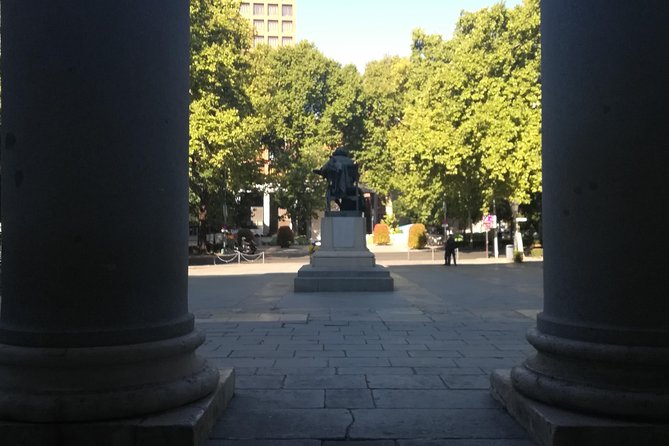
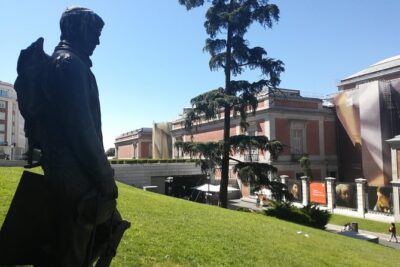
- Central meeting point: Meet at the Monument to Goya on Calle de Felipe IV at 4:00 pm.
- Check the group-size wording: The tour title says up to seven people, while the additional information says up to 20.
Why this short Prado visit works
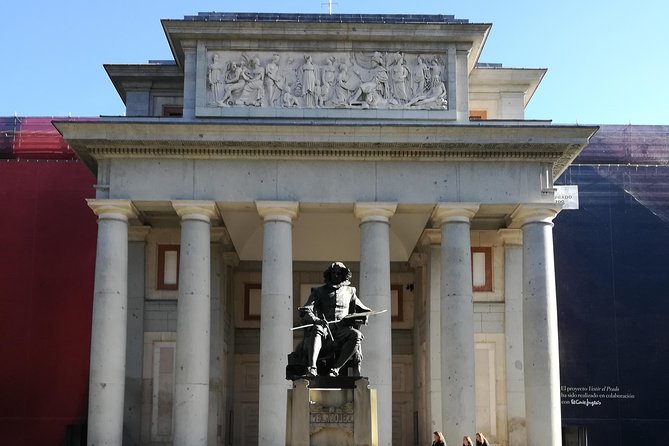
The Prado is not a museum you can casually finish in an hour and a half. Its collection is too large, and its strongest paintings come from several periods and countries. A guided route gives you a practical way to see the essentials without spending your first hour wandering through rooms and trying to decide what matters.
This tour is built around the great names. You can expect attention to Velázquez and Goya, along with Bosch, Rubens, Titian, El Greco, and other leading figures in classical European art. That selection gives you a broad look at how painting changed from the Renaissance through the 19th century.
I like this approach for a first visit. You get a framework for the museum instead of a random parade of famous canvases. The guide can explain why a work matters, how it fits its period, and how the Prado grew from a royal collection into Spain’s national museum.
The 90-minute length is also useful. You can place this visit into an afternoon without giving up the rest of your Madrid plans. At the same time, the short schedule means you should not expect a slow examination of every major room. The route is meant to give you the museum’s main ideas and works, not complete coverage.
More Art Museum Tours in Madrid
- Madrid: Prado Museum Entry Ticket
★ 4.6 · 20,699 reviews - Madrid: Small Group of Prado Museum Tour & Optional Tapas
★ 4.6 · 2,437 reviews - Madrid: Prado Museum Guided Tour with Skip-the-Line Ticket
★ 4.5 · 2,018 reviews
Meeting the guide at the Monument to Goya
The tour begins at the Monument to Goya, at Calle de Felipe IV, in the Retiro area of central Madrid. The meeting time is 4:00 pm, and the activity ends back at the meeting point.
That starting location matters because the Prado can feel confusing when you first approach it. You may see several entrances and busy public spaces around the museum. Having a named monument as the meeting point gives you a specific place to look for the guide rather than simply waiting somewhere near the building.
Allow enough time to reach Calle de Felipe IV. The tour starts at a fixed hour, and the value of a small guided visit depends on joining from the beginning. Confirmation is provided when you book, so check the meeting instructions and local transport details before setting out.
The Prado is near public transportation, which makes this afternoon appointment fairly easy to fit into a Madrid sightseeing day. Still, do not treat the 4:00 pm start as a loose suggestion. A late arrival could mean missing the introduction or having trouble finding the group inside the museum.
What you see in 90 minutes
The visit covers the museum’s major classical art. The route moves broadly from the Renaissance to Romanticism, using important works to show changes in style, subject, and artistic purpose.
Bosch and the early part of the route
Bosch gives the tour an unusual early highlight. His work is filled with strange images, moral warnings, and crowded details that reward explanation. A guide can help you look past the odd figures and understand how the painting fits the religious and artistic world of its time.
This is one reason a guided visit is more useful than simply walking past the painting. Bosch can seem like pure fantasy at first glance. Context helps you read the images and notice how carefully the scene is arranged.
More Prado tours and tickets:
- Madrid: Prado Museum Guided Tour With Fast Access
★ 4.8 · 1,785 reviews - Prado Museum Small Group Tour with Skip the Line Ticket
★ 5.0 · 1,738 reviews - Royal Palace & Prado Museum Skip the Line Guided Tour
★ 4.5 · 1,347 reviews - Madrid: Prado Museum Ticket with In-App Audio Guide
★ 3.6 · 1,154 reviews
Titian, El Greco, and the movement of European painting
Titian represents the power of Venetian painting and its attention to color and surface. El Greco brings a very different mood, with elongated forms and a more intense spiritual effect. Seeing these artists within one route helps you notice that European painting did not develop in one straight line.
You are not just collecting famous names. You are being shown contrasts between artists, regions, and periods. That is especially helpful if you know individual paintings but do not have a clear sense of how they relate to one another.
Velázquez and Las meninas
Velázquez is one of the Prado’s central attractions, and Las meninas is the painting most visitors hope to see. The work is famous for its unusual arrangement of figures, its play with viewpoint, and the way it makes you think about the artist, the royal family, and the person looking at the painting.
A guide adds real value here. You can spend several minutes staring at Las meninas and still miss the choices that make it so important. The tour gives you a way to organize your attention instead of simply taking a quick photograph and moving on.
The museum itself was once the royal collection, so Velázquez is not an isolated name on a wall. His work connects to the Spanish court and to the institution’s older purpose. The tour includes information about the museum’s development, which helps place the paintings inside the story of the building and collection.
Goya and the later rooms
The meeting point honors Goya, and his work is another major part of the visit. His paintings offer a sharp contrast to the courtly world associated with Velázquez. Goya’s art can be elegant, unsettling, satirical, or severe, and his place near the end of the route helps bring the museum’s long span of art into focus.
You should expect the guide to use Goya as more than another famous name. His work helps show how painting changed as artists responded to politics, society, and personal experience. The route then reaches toward Romanticism, giving the visit a clear sense of movement through time.
Rubens and the scale of the collection
Rubens represents another important strand of the Prado’s holdings. His large, energetic paintings show the force of Baroque art and give you another useful comparison with the more restrained or psychologically complex work elsewhere in the museum.
A 90-minute visit cannot give equal attention to every artist listed. The guide must make choices, and the exact amount of time spent with Bosch, Rubens, Titian, El Greco, Velázquez, and Goya may vary. That is not a flaw, but it is worth understanding before you book.
The Italian guide makes the difference
This is not simply an entrance ticket with a short introduction. The booking includes a professional guide, and the visit is conducted in Italian. If Italian is your preferred language for art and culture, that can make a real difference in how much you take away.
Stefania is the guide most closely associated with the experience. She is described as highly prepared, passionate, smiling, and good at keeping the group involved. Just as important, the comments about her do not describe a dry lecture. Her style appears to combine solid knowledge with a pleasant way of interacting.
That balance matters inside a large museum. Art explanations can become tiring when every painting receives a long block of facts. A guide who keeps the pace moving while leaving time to look is better suited to a 90-minute route.
The strongest praise centers on three qualities:
- Clear preparation: You receive information about the artworks and the museum.
- Strong interaction: The guide keeps your attention instead of speaking at you nonstop.
- Warm delivery: Stefania’s friendly manner makes the visit feel approachable.
The provider’s replies are playful and enthusiastic about Stefania, but your practical takeaway is simple: if she is leading your tour, you can expect a guide who takes the subject seriously without making the visit stiff.
No-line entry and what that value means
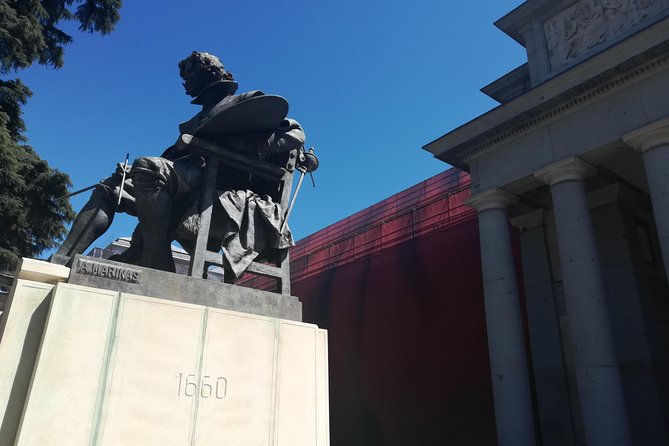
Admission is included, and the tour is sold with no standing in line. That saves you two common hassles: figuring out which ticket to buy and losing sightseeing time at the entrance.
The value of no-line access depends on the day and the museum’s crowd level. It does not mean the galleries will be empty. Once inside, other visitors will still be present, and popular paintings may draw a cluster of people. The guided format can still help you make better use of the time you have.
One useful detail from the visit feedback is the sense that the group could stop and look at works without feeling pressed by a large crowd. You should not treat that as a guarantee for every date, but it shows why the small-group promise matters. A compact group is easier to position in front of a painting and easier for the guide to manage.
There is one point you should clarify before booking. The tour title says a maximum of seven people, and the description emphasizes that quality depends on keeping the group small. Yet the additional information states that the activity may have up to 20 participants. If a group of seven or fewer is important to you, contact the provider at [email protected] before finalizing your plans.
Is $54.63 a fair price?
At $54.63 per person, this is not the cheapest way to enter the Prado. You are paying for more than admission, though. The price includes the museum ticket, a professional Italian-speaking guide, and no-line entry.
For you, the strongest value comes from the combination of language and direction. If you already know the Prado well or enjoy building your own art route, the guided fee may feel unnecessary. You could prefer to enter independently and spend as long as you like with selected paintings.
If this is your first Prado visit, the calculation looks better. You receive a planned route through major works, explanations in Italian, and help with one of Madrid’s most important cultural stops. The tour also prevents you from spending valuable time deciding where to begin.
The price makes the most sense for:
- Someone visiting the Prado for the first time
- An Italian-speaking couple or family
- Anyone who wants major works explained in a preferred language
- A visitor with only a limited afternoon schedule
- Someone who values entry assistance and a planned route
It makes less sense if you want several hours of quiet, independent viewing. In that case, a 90-minute guided introduction could be useful, but you would still need extra museum time afterward.
Who should book this Prado tour?
This visit suits art lovers who want structure without committing to a half-day program. The route is short enough for a busy Madrid itinerary, yet it includes many of the painters most closely linked to the Prado.
It is also a good match for Italian speakers who do not want to rely on an English or Spanish explanation. Art vocabulary and visual analysis can be easier to follow in the language you use most comfortably.
Families and mixed-interest groups may also find the length practical. Ninety minutes gives you a clear cultural experience without requiring an entire day in the museum. Still, children or adults who dislike guided pacing may prefer an independent visit.
The tour is less suitable for someone hoping to study every painting in detail. It is also not the right choice if you need a guaranteed group of exactly seven or fewer without first confirming that point. The available information uses two different group-size limits, so ask before booking if that detail affects your decision.
Practical details worth knowing
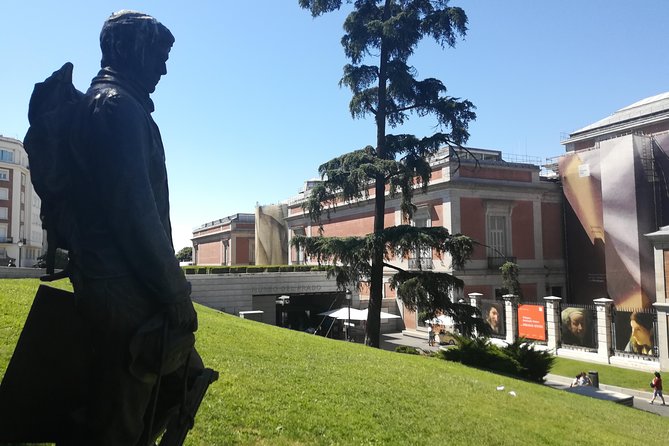
The tour lasts approximately one hour and 30 minutes. It starts at 4:00 pm and returns to the Monument to Goya, where you began.
Confirmation arrives at the time of booking. The experience is near public transportation, and most people can participate. Service animals are allowed.
Free cancellation is available if you cancel at least 24 hours before the local start time. Cancellations made less than 24 hours before the start, along with changes made inside that window, are not accepted for a refund.
The activity is recommended by 100 percent of the available rating sample and carries a 4.9 out of 5 rating from 13 ratings. The strongest praise is consistent: the Italian delivery, the guide’s preparation, her friendly manner, and the ability to enter without waiting in line.
Should you book it?
Book this Prado tour if you want a short, guided introduction in Italian with admission and no-line entry included. The route gives you a useful sweep from Bosch and Titian to Velázquez and Goya, with Las meninas as a major focal point. Stefania’s reported style, warm, clear, and engaging, adds real appeal.
Before paying, confirm the group size. The advertised maximum of seven is attractive, but the booking information also allows up to 20. If that is settled to your satisfaction, the tour offers a practical way to meet the Prado’s major artists without losing an afternoon to museum planning.
FAQ
How long does the Prado tour last?
The tour lasts approximately one hour and 30 minutes.
What time does the tour begin?
The start time is 4:00 pm.
Where does the tour meet?
The meeting point is the Monument to Goya at Calle de Felipe IV, Retiro, 28014 Madrid, Spain.
Where does the activity end?
The activity ends back at the meeting point.
Is museum admission included?
Yes. The museum ticket is included in the price.
Does the tour include no-line entry?
Yes. No-line entry is listed as an inclusion.
What language is the tour conducted in?
The tour is conducted in Italian.
What is the cancellation policy?
You can cancel for a full refund up to 24 hours before the experience start time. Cancellations or changes made less than 24 hours before the start are not accepted for a refund.
Just added around Madrid
- Retiro Park & Prado Museum Private Tour★ 5.0 · 7 reviews
- Paseo del Arte: Prado, Reina Sofía and Thyssen Museum★ 5.0 · 6 reviews
- Prado, Thyssen-Bornemisza or Reina Sofia Museum Private Tour★ 5.0 · 4 reviews
- Prado Museum Without the Crowds-Exclusive Guided Pre Opening Tour★ 5.0 · 137 reviews
- Madrid Highlights Private Tour with Prado Museum & Royal Palace★ 4.5 · 6 reviews
- Private Tour of Prado Museum in Madrid★ 4.5 · 28 reviews
- Prado Museum Guided Tour – In Spanish – 7 people per tour maximum★ 5.0 · 67 reviews
- Prado Museum Madrid Guided Tour Semi-Private 6ppl Max★ 5.0 · 67 reviews
Art Museum Tours in Madrid, compared.

Small Group of Prado Museum Tour & Optional Tapas
Read our review →
Prado Museum Guided Tour with Skip-the-Line Ticket
Read our review →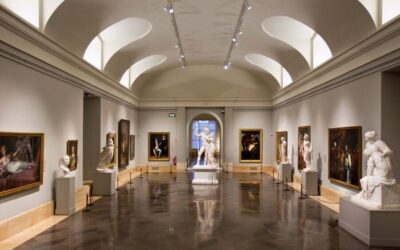
Prado Museum Small Group Tour with Skip the Line Ticket
Read our review →
Royal Palace & Prado Museum Skip the Line Guided Tour
Read our review →

Prado Museum Guided Tour with Skip-the-Line Ticket
Read our review →Browse the lists this tour appears in