
REVIEW · AMSTERDAM
Van Gogh Museum Amsterdam Small Group Guided Tour
Van Gogh’s paintings are easy to recognize, but much harder to understand at a glance. This tour gives you a clear path through his short career, from dark peasant studies to the bold colors of Arles and the restless brushwork of his final years. The small group, capped at 14 adults, keeps the visit personal, while the wireless Whisper System helps you hear without crowding around the guide.
I like two things here. First, the guide connects Van Gogh’s life, influences, techniques, and changing style instead of treating each famous painting as an isolated postcard. Second, the tour ends inside the museum, giving you time to revisit favorite works and see the special exhibition or remaining galleries on your own. The main drawback is that two hours goes quickly, and some visitors may find the 20-minute stop on the self-portraits longer than they prefer.
Five things to know before booking
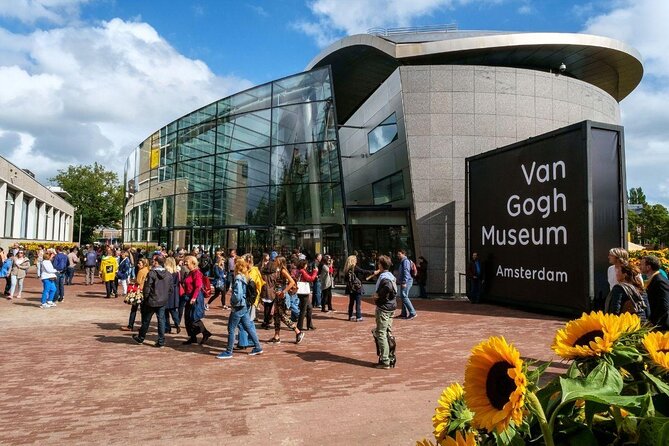
- You follow Van Gogh’s career in order: The route moves from early peasant paintings to Paris, Arles, Saint-Rémy, and Auvers.
- The group stays small: A maximum of 14 adults makes it easier to ask questions and stay near the guide.
- Wireless headphones help in crowded rooms: You can hear the commentary without standing shoulder to shoulder with the guide.
- The tour includes major works: Expect Sunflowers, The Bedroom, Almond Blossoms, Iris, The Potato Eaters, and Wheatfield with Crows.
- You can keep exploring afterward: The tour finishes inside the museum, and you may stay until closing time.
Why this museum tour works best with a guide
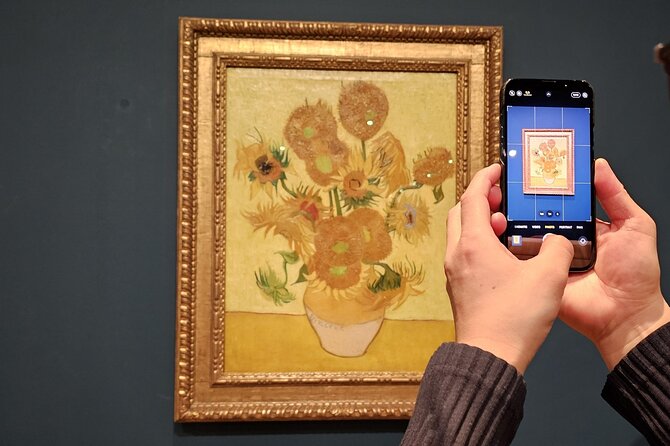
The Van Gogh Museum has an obvious appeal: it holds the largest collection of works by Vincent van Gogh, and you can see his artistic development in one place. The challenge is knowing how to look. A row of self-portraits can blur together, and a famous painting such as Sunflowers can attract so much attention that you miss the paint, method, and choices that make it special.
A good guide gives you a route through that story. The strongest guides on this tour, including Martina, Claire W, Kawika, Marlene, Roland, and Holly, have been praised for tying Van Gogh’s personal experiences to his artistic changes. That matters because the museum is not simply a collection of famous images. It is a record of an artist testing new ideas, responding to other painters, and changing his use of color and brushwork.
You also get something an audio guide cannot always provide: a person who notices what your group wants to see. One guide returned to a painting that several people had nearly skipped. Another used an iPad to show related images and photographs. The guide can answer a question, adjust the pace, or point out a small feature that would otherwise pass unnoticed.
That said, a guided visit is not automatically better for every person. If you prefer to read labels slowly, move at your own pace, or spend half an hour with one painting, an audio guide or independent visit may suit you better. This tour follows a planned route and gives some works more attention than others.
More Art Museum Tours in Amsterdam
- Amsterdam: Rijksmuseum Entry Ticket
★ 4.7 · 29,512 reviews - Amsterdam: Van Gogh Museum Ticket and City Canal Cruise
★ 4.6 · 3,899 reviews - Amsterdam: Van Gogh Museum Ticket & Canal Cruise
★ 4.5 · 3,304 reviews
Starting at Cobra Café near Museumplein
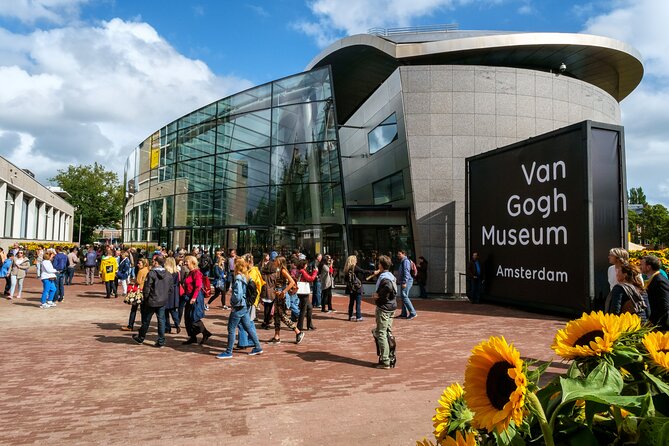
The meeting point is Cobra Café at Hobbemastraat 18, close to Amsterdam’s Museumplein. You should allow enough time to locate the café and meet the guide before the start. The museum sits near public transportation, so reaching the area is practical, but the tour itself is on foot inside the building after the group gathers.
The tour is offered in the morning or afternoon. That choice is useful when you are planning a full day around Museumplein, the Rijksmuseum, or other Amsterdam sights. The exact atmosphere inside the museum can change with the time of day, but you should expect busy rooms around the best-known works.
The tour is for adults aged 18 and older. The maximum group size is 14, a useful limit in galleries where a large crowd would make it hard to see the paintings or hear the guide. The headphones are especially helpful if you have difficulty hearing in busy rooms. One person specifically found the system useful while wearing hearing aids.
Admission to the permanent collection is included. Food and drinks are not included, and there is no café stop built into the two-hour route, so plan those around the visit rather than expecting a break.
Stop one: the self-portraits and the face of Van Gogh
The opening section focuses on Van Gogh’s self-portraits and lasts about 20 minutes. This can seem like a cautious start if you are eager to reach Sunflowers, but it gives the guide a useful set of paintings to explain how Van Gogh looked at himself and how his style changed.
The self-portraits also provide an immediate introduction to the way the museum is arranged. You begin with the artist’s development rather than jumping straight to the most famous images. Look for changes in color, brushwork, and the way the face is built from short, visible strokes.
The possible weakness is clear: if you already know these paintings well, 20 minutes may feel long. One visitor thought less time should have been spent here. Still, the section gives the guide a practical way to show how Van Gogh’s work moved from a more restrained approach toward stronger color and more forceful marks.
Stop two: peasants, Millet, and The Potato Eaters
The next 20-minute section takes you to the first-floor foyer and Van Gogh’s early interest in rural life. Here you see paintings connected to artists such as Jean-François Millet and Jules Breton, along with Woman Lifting Potatoes, a wall of portraits titled Head of a Peasant Woman, and The Potato Eaters.
This is an important correction to the common image of Van Gogh as only a bright-color painter. His early work is darker and more serious. The figures are tied to work, food, and the physical demands of rural life. The Potato Eaters is particularly useful because it shows the kind of subject Van Gogh believed was worth painting before his later French period transformed his palette.
I would pay attention to how the guide explains influence here. Van Gogh did not begin as a fully formed genius working in isolation. He studied other artists, copied subjects, and worked through difficult early experiments. The examples connected to Millet and Breton help you see those roots.
The stop also gives you a chance to understand his handling of people. The portraits are not polished society pictures. Their roughness and solemn expressions fit the lives Van Gogh wanted to represent. If your main interest is color, this section may feel less immediately exciting, but it makes the later paintings more meaningful.
More Van Gogh Museum tickets:
- Van Gogh Museum Amsterdam Exclusive Tour w/ Reserved Entry
★ 5.0 · 1,760 reviews - Van Gogh Museum Tour Reserved Entry Semi Private
★ 5.0 · 1,437 reviews - Amsterdam: Van Gogh Museum Entry Ticket and Guided Tour
★ 4.9 · 681 reviews - Combo Ticket: Van Gogh Museum Ticket and 1-Hour Canal Cruise
★ 4.0 · 676 reviews
Stop three: Paris, new influences, and a lighter palette
The third stop covers Van Gogh’s move to Paris from 1886 to 1888. The featured works include Self Portrait with Felt Hat, Still Life with Absinthe, In the Café: Agostina Segatori in Le Tambourin, and Garden with Courting Couples.
This is where the story begins to shift. Paris exposed Van Gogh to new artistic ideas and a lighter, more varied use of color. The works here help you see him testing new methods rather than simply repeating the dark tones of his early period.
Self Portrait with Felt Hat is a good work to study closely. The surface can look almost restless, with marks that remain visible instead of being smoothed away. The guide may also point out how Van Gogh uses the self-portrait as a working laboratory, trying out color combinations and brush patterns on his own face.
The café painting and the garden scene broaden the picture. Van Gogh was not only painting peasants and inward-looking portraits. He was responding to urban life, leisure, and the modern art around him. Still Life with Absinthe may seem modest beside the famous works later in the route, but it helps show how ordinary objects became exercises in color and arrangement.
This section is especially valuable if you want to understand artistic development rather than collect famous titles. The change from early seriousness to Parisian experimentation happens quickly, and the guide makes that transition easier to follow.
Stop four: Arles, Sunflowers, and The Bedroom
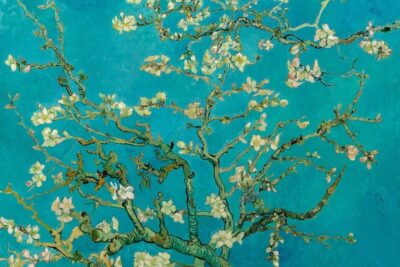
The Arles section is likely the emotional center of the tour. Van Gogh moved to the south of France in 1888, and the museum presents several works from this period, including Sunflowers, Almond Blossoms, The Bedroom, Japanese paintings copied from prints, and The Yellow House.
Here, color takes over. Sunflowers is famous for good reason, but it is worth looking beyond the yellow surface. A guide can direct your attention to the thick paint, the variation within a single color, and the way the flowers feel both decorative and slightly worn. You may have seen reproductions many times, yet the actual texture is one of the reasons to stand in front of the original.
The Bedroom offers a different lesson. The simple room and skewed lines can look almost childlike in reproduction, but the painting is carefully constructed. The unusual perspective and strong blocks of color create a feeling that is not quite calm, even though the subject is an ordinary bedroom.
The Japanese prints matter because they show an influence that is easy to miss. Van Gogh admired Japanese art and made copies from prints, learning from their flat areas of color, clear outlines, and unusual compositions. The guide can help you connect those studies to the way he framed later scenes.
The Yellow House brings the setting back to Van Gogh’s hopes for a shared artistic life in Arles. You do not need to know every personal detail to see that this period combined high ambition with growing strain. The paintings are bright, but the story behind them is not simply cheerful.
This stop can be crowded around the best-known works. The Whisper System helps, but you may still need patience to get a clear view. Stay close enough to see the painting, then step back when the group moves on.
Stop five: Saint-Rémy and the force of the brushwork
The fifth stop moves to level three and covers Saint-Rémy-de-Provence. The works include Almond Blossoms, Wheatfield with a Reaper, Iris, and Pieta after Delacroix. The section lasts about 20 minutes.
These paintings offer some of Van Gogh’s strongest contrasts. Almond Blossoms is light and delicate, while Wheatfield with a Reaper carries a far heavier sense of movement and work. Iris brings intense color and a close look at how Van Gogh could make a single subject fill the canvas with energy.
Pieta after Delacroix is useful because it shows Van Gogh responding directly to another artist. His version is not a simple copy. It reveals how he translated an older image into his own color and brushwork.
At this point in the route, the guide’s explanation of technique becomes particularly useful. You can see how paint thickness, directional strokes, and color choices create mood. One guide explained the types of paint Van Gogh used and how he applied them to bring out the feeling of a subject. That sort of detail gives you something concrete to look for instead of reducing every painting to a story about illness or sadness.
The museum’s arrangement also helps here. Because the works are shown in sequence, you can compare the changing pace of his marks and the growing pressure in the compositions. This is one reason a chronological tour can be more satisfying than wandering randomly through the galleries.
Stop six: Auvers and the final paintings
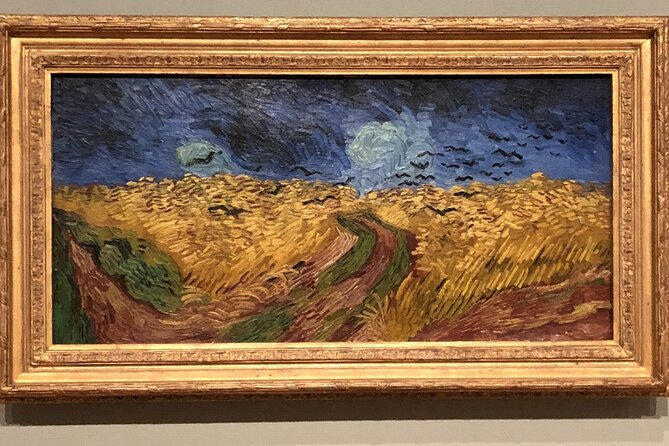
The last stop takes you to the Auvers room on level three. It includes Tree Roots and Wheatfield with Crows and lasts about 15 minutes.
This is a brief ending, but it carries a lot of weight. The paintings are often discussed in relation to Van Gogh’s final weeks, yet the guide should also keep your attention on the paintings themselves. Tree Roots makes the ground feel active and tangled. Wheatfield with Crows has a broad, unsettled composition that invites strong interpretations, but it is best viewed first as a painting of movement, direction, and color.
The short timing means you may want to return to this room after the guided portion. The route gives you an introduction, not unlimited study time. Since you remain inside the museum at the end, you can come back with a clearer idea of what you want to examine.
What $77.43 buys you
At $77.43 per person, this is not the cheapest way to enter the Van Gogh Museum. You are paying for admission to the permanent collection, a live English-speaking guide, the small group, and the structure of a two-hour visit.
The value depends on how you use museums. If you would otherwise walk past important works without understanding their place in Van Gogh’s career, the guide can make the extra cost worthwhile. The strongest guides, including Martina, Kawika, Claire W, and Marlene, have been praised for clear explanations, good pacing, humor, and a genuine interest in the subject. One guide even went beyond the scheduled two hours, though you should not assume every tour will run late.
The price is less convincing if you prefer total freedom. You may spend more time than you want on self-portraits or early works, while the famous paintings receive only a portion of the visit. An audio guide lets you choose your own route and pace, so it may be the better purchase for repeat visitors or people with a narrow list of favorite works.
The best value comes from using the tour as an introduction, then staying afterward. The tour ends at Museumplein 6, inside the museum, and you can remain until closing time. That gives you the guide’s framework first, followed by independent time for the paintings that caught your attention.
Who should book this two-hour visit
I would recommend it to a first-time visitor who wants more than a quick look at the famous paintings. It also suits couples or friends with different levels of interest in art. One guide helped a person who was not especially interested in art enjoy the museum by linking the paintings to Van Gogh’s life and changes in style.
It is a good choice for anyone who wants to understand technique. Ask about brushwork, paint, artistic influences, and the movement from the Netherlands to Paris, Arles, Saint-Rémy, and Auvers. The guide can give you a set of questions to carry into the rest of the museum.
It is less suitable for children because the activity is limited to adults aged 18 and older. It may also frustrate a serious Van Gogh specialist who wants to study a small group of paintings at length. You will see a selected route, not every room in detail.
The schedule works well before or after other Museumplein sights. Choose morning or afternoon based on your day, and leave room afterward for independent museum time rather than racing straight to another appointment.
Booking details and cancellation
Confirmation is provided when you book. The experience is offered in English, and the group has a maximum of 14 participants. The tour is near public transportation, with the meeting point at Cobra Café and the ending inside the museum.
You can cancel for a full refund up to 24 hours before the local start time. Cancellations or changes made within 24 hours are not refunded or accepted, so check your Amsterdam plans before committing.
My booking advice
Book this tour if you want a clear story of Van Gogh’s artistic development and value a live guide who can answer questions. The strongest part is the connection between paintings, technique, influences, and the artist’s changing circumstances. The headphones, small group, and extra time inside the museum all add practical value.
Skip it in favor of an audio guide if you already know the collection well or want to linger wherever you choose. For most first-time adults, though, the $77.43 price is easier to justify when you stay afterward and use the guided route as your map through the museum.
FAQ
How long does the Van Gogh Museum guided tour last?
The guided portion lasts about two hours. The route includes six stops across the museum, with most sections taking about 20 minutes and the final Auvers room taking about 15 minutes.
What paintings are included on the tour?
The route includes works such as The Potato Eaters, Self Portrait with Felt Hat, Sunflowers, Almond Blossoms, The Bedroom, Iris, Tree Roots, and Wheatfield with Crows. It also includes paintings connected to Millet, Jules Breton, Delacroix, and Japanese prints.
Can I stay in the museum after the tour?
Yes. The tour ends inside the Van Gogh Museum, and you can stay until closing time to explore more of the collection independently.
Is admission included in the price?
Admission to the permanent collection is included. Special exhibitions are not part of the guided tour and can be visited afterward at your own pace.
Is the tour available in English?
Yes. The experience is offered in English with a live guide.
Who can take this tour?
The tour is available only to adults aged 18 or older. The group has a maximum of 14 participants.
Just added around Amsterdam
- Small Group Tour to NP Hoge Veluwe (van Gogh) from Amsterdam★ 5.0 · 19 reviews
- Van Gogh and Rembrandt Immersive Experience Entry Amsterdam★ 4.0 · 2 reviews
- Van Gogh Museum Guided Visit Including Tickets★ 4.5 · 9 reviews
- Van Gogh Museum with Audio Guide★ 3.5 · 80 reviews
- Van Gogh Museum Tour excluding Entrance Tickets★ 5.0 · 16 reviews
- Van Gogh Museum, Small Group Tour (incl timed entry tickets)★ 5.0 · 5 reviews
- Van Gogh Museum Entry Ticket and Guided Tour★ 4.5 · 48 reviews
- Amsterdam: Explore the Van Gogh Museum & His Masterpieces★ 3.5 · 64 reviews
Art Museum Tours in Amsterdam, compared.
Van Gogh Museum Amsterdam Exclusive Tour w/ Reserved Entry
Read our review →
Rijksmuseum Amsterdam Small-Group Tour with Private Upgrade
Read our review →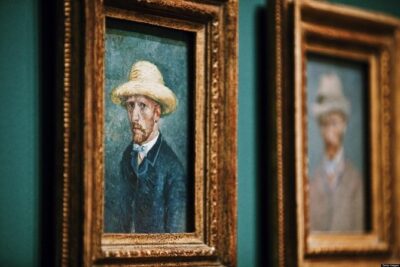
Van Gogh Museum Tour Reserved Entry Semi Private
Read our review →
Rijksmuseum Entry Ticket and Canal Cruise Combo
Read our review →Browse the lists this tour appears in