
REVIEW · AMSTERDAM
Rijksmuseum & Amsterdam City Center Semi-Private Tour 12ppl Max
Amsterdam packs a lot into a small area, and this tour makes good use of that fact. You begin with the Rijksmuseum, then cross the city on foot from medieval gates and Chinatown to quiet courtyards, grand canals, and the Jordaan. It is a useful first-day introduction, not a quick photo stop.
I like the small maximum of eight people, which gives your guide room to answer questions. I also like the museum-and-city pairing: you get Dutch art in the morning, then see the streets and buildings that give that art its setting. The main drawback is the price, $286.56 per person, especially since lunch and hotel transport are not included.
Key points to know before booking
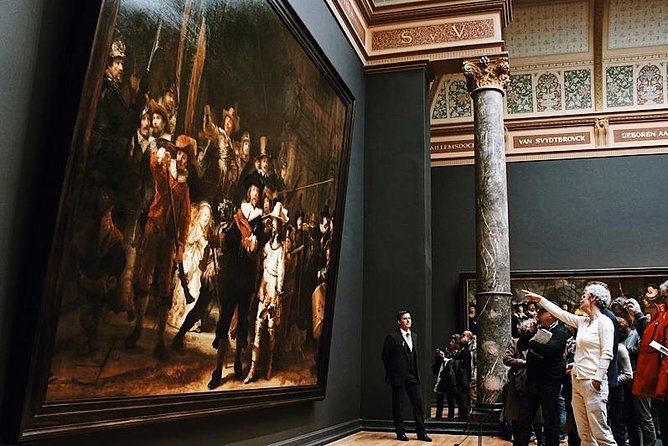
- Rijksmuseum first: Spend about two and a half hours with a guide among Rembrandt, Vermeer, dollhouses, historical objects, and the famous library.
- Eight people maximum: Despite the tour title suggesting 12 people, the supplied details set the actual limit at eight.
- A full half-day on foot: The route lasts about 5.5 hours, including lunch, and is not suited to wheelchair users or people with walking limitations.
- Amsterdam’s old center in one sweep: See St. Nicholas Basilica, the Weeping Tower, Zeedijk, Nieuwmarkt, Begijnhof, Dam Square, the canal belt, and the Jordaan.
- Museum ticket remains useful: After the guided portion ends, your Rijksmuseum admission is valid for the rest of the day.
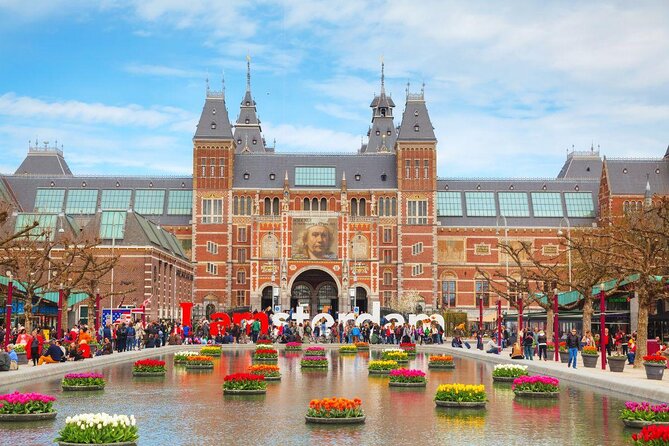
- Check the meeting point carefully: The description refers to the large I am Amsterdam sign, while the meeting details give Cobra Café on Hobbemastraat at 10 am.
Why this Amsterdam combination works
Many city tours force you to choose between art and street life. This one gives you both, with a clear break in the middle. The Rijksmuseum supplies the cultural foundation, while the afternoon walk helps you recognize the city’s churches, canal houses, old gates, almshouses, and public squares.
I especially like the order. Amsterdam’s art can seem detached if you only see it in a gallery. Afterward, the walk brings you through the canals, narrow houses, and historic neighborhoods that shaped Dutch urban life. You will not visit every building inside, but you will build a useful mental map.
The small group matters inside a museum as large as this one. A guide can point out a detail in a Rembrandt, explain why a Vermeer interior matters, or pause when a question comes up. Diana, one guide associated with this experience, has been described as accommodating and capable of giving an in-depth museum visit followed by a landmark-filled city walk.
Still, this is not a relaxed wandering tour. The route contains many stops, and most are short. If you prefer to linger at one painting, take a long café break, or explore one neighborhood slowly, the schedule may feel brisk.
More Art Museum Tours in Amsterdam
- Amsterdam: Rijksmuseum Entry Ticket
★ 4.7 · 29,512 reviews - Amsterdam: Van Gogh Museum Ticket and City Canal Cruise
★ 4.6 · 3,899 reviews - Amsterdam: Van Gogh Museum Ticket & Canal Cruise
★ 4.5 · 3,304 reviews
Starting at the Rijksmuseum, with one meeting-point detail to settle
The tour begins at 10 am and is described as meeting by the letter I of the large I am Amsterdam sign outside the Rijksmuseum. The formal meeting-point information, however, lists Cobra Café at Hobbemastraat 18. That difference is important. Confirm the exact location with Babylon Tours Amsterdam before setting out, and provide your mobile number with the country code as requested.
The museum is the morning anchor. Prebooked admission means you do not have to join the regular ticket queue, though extra security checks can still cause a short wait. Bring only a handbag or small, thin backpack, since large bags and suitcases are not allowed inside.
You will spend about two hours and 30 minutes at the Rijksmuseum. That is long enough for a thoughtful overview, but not long enough to see all 8,000-plus objects. The guide’s job is to choose well, connecting major paintings with less familiar objects and Dutch social history.
Inside the Rijksmuseum: Rembrandt, Vermeer, and unexpected details
The museum is often treated as Amsterdam’s answer to the Louvre, but its strength is its focus on Dutch art and culture across the centuries. You can expect attention to famous names such as Rembrandt and Vermeer, along with objects that show how people lived, worked, worshiped, and displayed wealth.
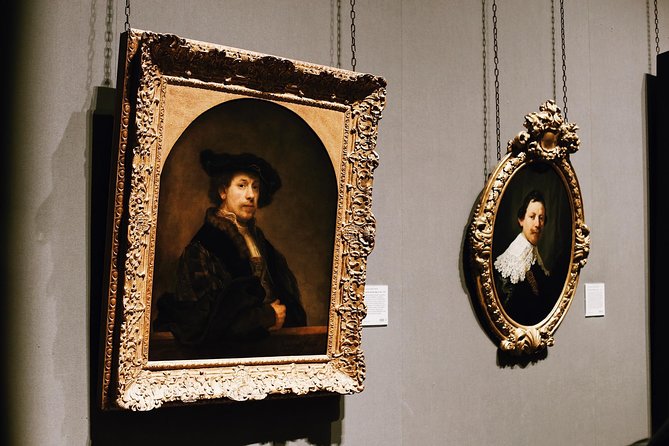
Rembrandt is a natural centerpiece. His work gives the guide a chance to discuss portraiture, light, personality, and the commercial world of 17th-century Amsterdam. Vermeer’s The Milkmaid offers a quieter view of domestic life, with close attention to an ordinary interior and a woman at work.
I like that the visit is not limited to the usual masterpieces. The museum’s 17th-century dollhouses are a memorable example. They reveal how wealthy households presented their homes and possessions, and they give you a different way to think about status in Dutch society.
The 19th-century library is another unusual stop. Its shelves and reading-room setting add a sense of how knowledge was collected and preserved. Your guide may need to keep explanations quiet in certain rooms, and some spaces have restrictions on speaking. That is normal museum etiquette, but it can affect how much commentary you receive at each point.
The collection changes at times, and occasional closures can happen without warning. If the museum opening is delayed by more than an hour, an alternative may be offered, but the stated conditions do not promise a refund or discount. This is one reason to keep your plans flexible on the day.
A lunch break before the city walk
After the museum, you get a lunch break at your own expense. The supplied details do not name a restaurant or set a fixed lunch allowance, so budget separately and ask your guide where the break will take place.
This pause is useful. Five and a half hours of museum time and walking can be tiring, and a meal gives you a chance to rest before the second half. It also means the tour price is not as all-inclusive as the phrase all entrance fees might suggest. Lunch, gratuities, and transport to and from your hotel are extra.
The gap between the two halves can also help you decide how much energy to spend in the museum. If you know you want to return later, use the morning for the guide’s highlights and save a few rooms for your independent visit.
More Rijksmuseum tickets:
- Amsterdam: City Canal Cruise and Rijksmuseum
★ 4.5 · 2,226 reviews - Rijksmuseum Amsterdam Small-Group Tour with Private Upgrade
★ 4.5 · 1,547 reviews - Amsterdam: Rijksmuseum Entry Ticket and Canal Cruise Combo
★ 4.3 · 1,276 reviews - Go City Amsterdam Pass: Attractions Pass with Rijksmuseum
★ 4.3 · 1,051 reviews
St. Nicholas Basilica and the old harbor edge
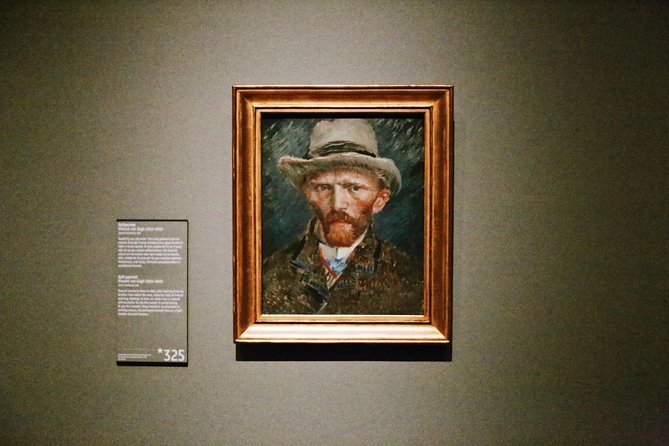
The walking portion begins around the historic center and includes St. Nicholas Basilica. Built in the late 19th century, it reflects the period when Roman Catholics could again worship publicly after centuries of restriction. Its design combines several architectural styles and artistic movements.
The stop is brief, about 10 minutes, so expect an explanation from outside or a short look rather than a long church visit. It sets up an important theme of the walk: Amsterdam’s buildings often record changes in law, religion, trade, and social life.
From there, the route heads toward the Schreierstoren, or Weeping Tower. This former section of the medieval city wall is tied to the story of women saying farewell to men leaving the port for war or fishing. The name carries a strong emotional image, though the stop itself is short and admission is not included.
Zeedijk, Nieuwmarkt, and De Waag
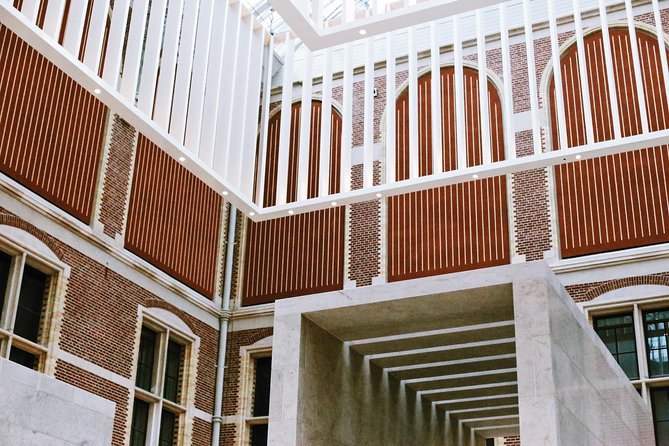
Zeedijk gives you a different view of central Amsterdam. It is associated with the city’s Chinatown and has Asian markets, restaurants, shops, and a large Chinese-style Buddhist temple. The walk does not include a separate temple admission, so you should think of this as a street-level introduction rather than a detailed religious visit.
Next comes Nieuwmarkt, a square with a long commercial role. Its position just inside the old city gate made it useful to traders and shoppers, and today it remains a lively part of the old center. The route then focuses on De Waag, a 15th-century building that began as a city gate and later served as a guildhall, museum, and fire station.
These stops work well together because they show Amsterdam as a working city, not just a postcard of canals. Trade, food, immigration, defense, and civic life all appear within a few blocks.
Wide houses, narrow houses, and the Dutch East India Company
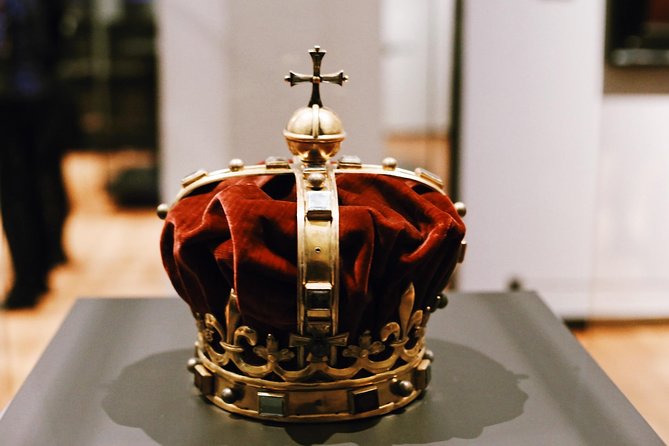
The contrast between the Trippenhuis and the Kleine Trippenhuis is one of the walk’s most visual moments. The Trippenhuis is Amsterdam’s widest house, while the smaller building across from it is one of the narrowest. Together they help explain why canal architecture is so varied.
At the Oost-Indisch Huis, you step into the courtyard of the former Dutch East India Company headquarters. The site connects Amsterdam’s wealth to overseas trade and the company often described as the world’s first multinational corporation.
The tour also points out the narrow Kleine Trippenhuis again as a reminder of land taxes and the pressure to build upward on limited plots. These quick stops are not full museum visits, but they give you details to notice later as you walk along the canals.
Churches, Rembrandt’s house, and the Stopera

Zuiderkerk was Amsterdam’s first purpose-built Protestant church. Its tower remains an important marker in the city, and its design by Hendrick de Keyser helps explain the architectural character of the 17th century.
You then pass Museum Het Rembrandthuis, the house where Rembrandt lived and worked from 1639 to 1656. The museum inside contains his etchings and paintings by his contemporaries, but admission is not part of this walking stop. If Rembrandt interests you, note the location for a separate visit.
The route continues to the Stopera, the complex housing Amsterdam’s city hall and Dutch National Opera and Ballet. Its long path from early planning to construction gives the guide a chance to discuss modern civic projects, not only old buildings.
A brief stop at Huis Aan De Drie Grachten adds another canal-house detail. This 17th-century building faces three canals, making its unusual position easy to appreciate from the street.
Begijnhof and Dam Square
Begijnhof is one of Amsterdam’s best pauses from the noise of the central streets. This enclosed courtyard once housed Beguines, unmarried women who lived together under vows of chastity. The setting includes old houses, a garden, and two churches.
The stop is short, about 10 minutes, and access rules can vary. Be respectful of the quiet residential character. This is not a place to treat as a loud sightseeing corridor.
Dam Square follows, with the Royal Palace, Nieuwe Kerk, and National Monument. It is one of Amsterdam’s main public spaces, so you may find events and crowds here. The square can feel less intimate than Begijnhof, but it is useful for understanding the city’s civic center.
The canal belt and the final walk through the Jordaan
The route then reaches the Herengracht, including the Golden Bend. This stretch is known for large canal mansions built during the Dutch Golden Age. The façades offer a clear contrast with the narrow homes seen earlier.
At the Anne Frank House, the guide pauses outside. You do not enter as part of this tour, and the ticket is not included for that attraction. The stop is brief, but the location remains an important marker of Amsterdam’s wartime story. Nearby Westerkerk has the city’s tallest church tower, another useful point of reference.
The walk continues past the unusual façades at Bloemgracht 87 to 91, where gable stones show allegories and trade symbols. You then see the Karthuizerhof, described as Amsterdam’s largest hofje. Like Begijnhof, it represents the city’s tradition of building sheltered courtyards for people in need, including the poor and elderly.
Noorderkerk was built for the Jordaan district in the 17th century. Its cross-shaped floor plan reflects Protestant ideas about worship and sightlines. The final stop is Het Papeneiland, a brown café dating to 1642 at a particularly attractive canal corner. It is associated with apple pie, but the tour does not include food or a tasting.
Ending here is practical. You finish in a different part of town from the Rijksmuseum, with the canal district and Jordaan nearby for further exploring. Your museum ticket remains valid all day, so you can return to the Rijksmuseum later if you still have the energy.
Is $286.56 a fair price?
At $286.56 per person, this is an expensive walking tour. The price becomes easier to justify if you value a private-feeling group, an expert-led Rijksmuseum visit, and a structured route through many central sights. Entrance fees are included, and the museum ticket remains useful after the guided visit.
The value is weaker if you mainly want transportation, a sit-down lunch, or long visits inside several buildings. Most city stops last only five to 10 minutes, and several are viewed from outside. You are paying for selection, explanation, and convenience rather than a series of full admissions.
Group discounts may improve the calculation for a larger booking. Still, compare the price with the cost of arranging a museum guide and a separate walking tour. For someone visiting Amsterdam for the first time and wanting one organized day, the combined format may be worth it.
Who should book this tour?
I would choose it for a first visit, especially if you want help making sense of Dutch art before exploring the old city. It also suits couples, families with older children, and small groups who value questions and a quieter pace than a large coach tour allows.
You should be comfortable walking for several hours on cobblestones and city streets. The tour is not recommended for people with walking disabilities or wheelchair users, and a moderate level of physical fitness is required.
The tour runs in English, in rain or shine. Wear practical shoes and bring clothing suitable for changing weather. Appropriate dress may be required at some sites.
Should you book the Rijksmuseum and city-center tour?
Book it if you want one guide to connect Amsterdam’s major art museum with its medieval center, canal houses, churches, hofjes, and Jordaan streets. The eight-person limit and all-day museum ticket are the strongest practical benefits.
Skip it if the high price strains your budget, if you prefer independent museum time, or if a long walk sounds tiring. Before paying, confirm the meeting point, since the information gives both Cobra Café and the I am Amsterdam sign. If that detail is settled and you are ready for a full half-day on foot, this tour offers a focused first look at Amsterdam with plenty of useful historical context.
FAQ
How long does the tour last?
The tour lasts approximately 5.5 hours, including a lunch break.
What time does the tour start?
The stated start time is 10 am.
How many people can join the tour?
The maximum is eight people per tour. A minimum of two guests is required for the tour to operate.
Is lunch included?
No. The lunch break is included in the schedule, but lunch is at your own expense.
Can I return to the Rijksmuseum after the tour?
Yes. Your Rijksmuseum ticket remains valid for the rest of the day, so you can return after the walking tour.
Is hotel pickup included?
No. Hotel pickup and drop-off are not included. Taxi or Uber is recommended for transport to the meeting point.
More Semi-Private Gallery Tours in Amsterdam
- Van Gogh Museum Tour Reserved Entry Semi Private
★ 5.0 · 1,437 reviews - Van Gogh & Rijksmuseum w/ Reserved Entry Semi-Private 8ppl Max
★ 5.0 · 419 reviews - Rijksmuseum Amsterdam Semi-Private Guided Tour
★ 4.5 · 229 reviews - Amsterdam Rijksmuseum Tour Semi-Private with 12ppl Max
★ 5.0 · 194 reviews
Just added around Amsterdam
- Small Group Tour to NP Hoge Veluwe (van Gogh) from Amsterdam★ 5.0 · 19 reviews
- Van Gogh and Rembrandt Immersive Experience Entry Amsterdam★ 4.0 · 2 reviews
- Van Gogh Museum Guided Visit Including Tickets★ 4.5 · 9 reviews
- Van Gogh Museum Tour excluding Entrance Tickets★ 5.0 · 16 reviews
- Van Gogh Museum with Audio Guide★ 3.5 · 80 reviews
- Van Gogh Museum, Small Group Tour (incl timed entry tickets)★ 5.0 · 5 reviews
- Van Gogh Museum Entry Ticket and Guided Tour★ 4.5 · 48 reviews
- Amsterdam: Explore the Van Gogh Museum & His Masterpieces★ 3.5 · 64 reviews
Art Museum Tours in Amsterdam, compared.



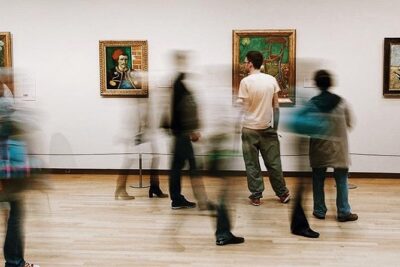
Van Gogh Museum Amsterdam Exclusive Tour w/ Reserved Entry
Read our review →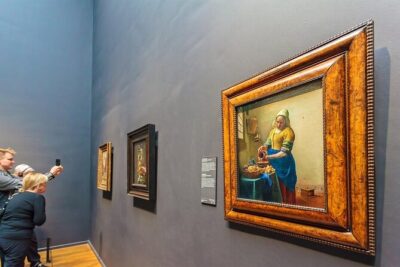
Rijksmuseum Amsterdam Small-Group Tour with Private Upgrade
Read our review →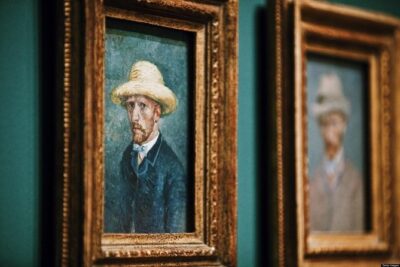
Van Gogh Museum Tour Reserved Entry Semi Private
Read our review →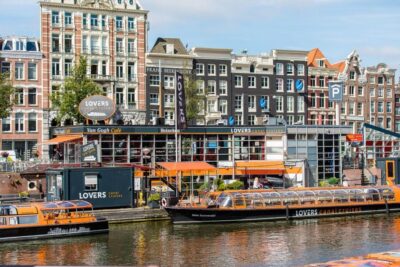
Rijksmuseum Entry Ticket and Canal Cruise Combo
Read our review →Browse the lists this tour appears in