

REVIEW · AMSTERDAM
Amsterdam: Van Gogh Museum Guided Tour & Entry Ticket (Max 6 ppl)
Vincent van Gogh’s paintings are easy to recognize, but much harder to understand without the story behind them. This 90-minute museum tour links his paintings to his family, friendships, mental health, and changing artistic aims, turning a famous collection into a clear human story. You may be guided by Titia, Lucien, Liz, Cécile, Lucy, Anke, Mercedes, or another Dutch art historian from the team.
I especially like the maximum group size of six, which gives you room to ask questions and hear the guide without fighting a large crowd. I also like the efficient route through major works such as The Potato Eaters, Sunflowers, The Yellow House, and Almond Blossom, followed by unlimited time to remain in the museum on your own.
The main consideration is the price: $168.09 per person is a serious outlay for 90 minutes. The tour makes the most sense if you want expert interpretation and have limited time, but less so if you prefer to read labels quietly and explore every floor at your own pace.
Key points to know before booking

- Small group of up to six: You get a far more personal setting than a large museum walk, with a better chance to ask about particular paintings.
- A life story told through art: The route connects Vincent’s family, Theo’s support, relationships, mental difficulties, and artistic changes.
- Major works covered: Expect attention to The Potato Eaters, Sunflowers, The Yellow House, and Almond Blossom.
- 90 minutes with continued museum access: The guided portion is focused, but you may stay inside afterward for as long as you wish.
- Dutch art historian as guide: Guides including Titia, Liz, Cécile, Lucy, Anke, Mercedes, and Lucien are praised for clear storytelling and strong art knowledge.
- Plan ahead: Museum time slots are released only three months ahead, so an early booking expresses a preference but cannot guarantee the exact requested time.
What this Van Gogh tour actually adds
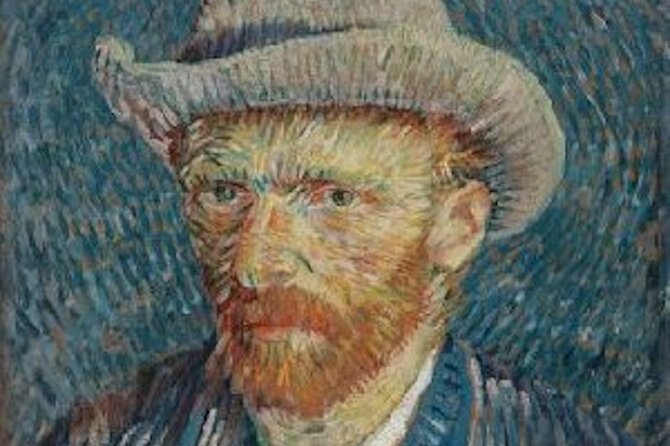
The Van Gogh Museum is not short on famous paintings. What it can lack, especially on a busy day, is a clear thread tying the rooms together. You may recognize the thick brushwork and bright colors but still wonder how Vincent moved from the dark Brabant paintings to the charged color of Arles.
That is where this experience earns its keep. The guide frames the collection as a sequence of decisions rather than a parade of famous images. You learn why Vincent picked up painting at 27, how his brother Theo supported him, and how his family life shaped his work.
I find this approach much more useful than a list of dates. A painting becomes easier to read when you know what Vincent was trying to do, what stage of his career he was in, and what pressures surrounded him.
The guide also addresses difficult subjects without reducing Vincent to a tragic stereotype. His mental health, temper, relationships, and eventual suicide are part of the story, but so are his discipline, ambition, and artistic experiments. That balance matters. It lets you see both the suffering and the remarkable skill.
More Art Museum Tours in Amsterdam
- Amsterdam: Rijksmuseum Entry Ticket
★ 4.7 · 29,512 reviews - Amsterdam: Van Gogh Museum Ticket and City Canal Cruise
★ 4.6 · 3,899 reviews - Amsterdam: Van Gogh Museum Ticket & Canal Cruise
★ 4.5 · 3,304 reviews
Meeting at Paulus Potterstraat 7
The experience begins at Paulus Potterstraat 7, 1071 CX Amsterdam. The tour then enters the Van Gogh Museum, whose address is Museumplein 6, 1071 DJ Amsterdam.
The starting point and museum are close enough to be treated as one Museumplein-area visit, but you should still allow time to find the guide and gather before the scheduled start. Your confirmation arrives when you book, and the ticket is mobile, so keep the booking details easy to access on your phone.
The museum is near public transportation, which helps if you are coming from another part of Amsterdam. Since the tour is time-specific, I would avoid arriving at the last minute. A late arrival can be especially awkward with a small group, where the guide cannot easily repeat the opening explanation.
The experience ends at the museum, not back at the meeting point. That is useful. You can continue through the collection after the formal tour, return to a painting that caught your eye, or take a break before moving on to another Museumplein sight.
Starting with Vincent at age 27
One of the more revealing parts of the visit is the explanation of why Vincent began painting at 27. That starting point gives the rest of the tour a helpful sense of scale. He was not a child prodigy who simply followed a straight path toward fame. His artistic life came later and developed through effort, uncertainty, and repeated change.
The guide also brings Theo into the picture. Theo was not a minor footnote. His relationship with Vincent, including his practical and emotional support, is central to understanding how Vincent continued working.
This family connection gives the paintings more weight. You are not looking at isolated works produced by a solitary genius. You are seeing the output of a complicated relationship between two brothers, with Theo helping Vincent pursue a career that did not bring financial security during his lifetime.
The tour also points toward the person who helped make Vincent famous after both brothers had died. The story includes a woman whose work and persistence mattered greatly to his reputation. This is a useful correction to the familiar version of art history, which often credits a lone male genius and leaves out the people who preserved and promoted his work.
The Potato Eaters and the dark Brabant period
The Potato Eaters belongs to the early, darker period associated with Brabant. Its earthy palette and serious mood can feel far removed from the vivid paintings most people associate with Van Gogh.
That contrast is the point. The guide helps you see that Vincent did not suddenly arrive at bright yellow and electric blue. He first worked through a period focused on rural life, labor, and ordinary people. The darker colors reflect both his subject matter and his early artistic concerns.
I like having this work discussed early in the story because it prevents a common mistake: assuming that Van Gogh’s art was always about color and swirling brushstrokes. His career was a series of experiments. The museum becomes easier to follow once you recognize that the change in appearance reflects a change in place, influence, and purpose.
This is also where a guide can help you notice more than the general mood. A short explanation of technique and intention can make a familiar image feel less like a textbook illustration and more like a serious attempt to portray working people with dignity.
More Van Gogh Museum tickets:
- Van Gogh Museum Amsterdam Exclusive Tour w/ Reserved Entry
★ 5.0 · 1,760 reviews - Van Gogh Museum Tour Reserved Entry Semi Private
★ 5.0 · 1,437 reviews - Amsterdam: Van Gogh Museum Entry Ticket and Guided Tour
★ 4.9 · 681 reviews - Combo Ticket: Van Gogh Museum Ticket and 1-Hour Canal Cruise
★ 4.0 · 676 reviews
Paris and the turn toward color
The Paris period marks a major shift. Vincent encountered new ideas and began experimenting with lighter colors, different brushwork, and a wider range of artistic influences.
You may already know that Paris changed his palette, but the tour places that change within his larger development. The move was not simply a switch from brown to bright color. It was part of an active search for a personal style.
This section is especially useful if you have seen Van Gogh’s later paintings but never understood how he reached them. The guide connects the earlier dark work with the more open, energetic pieces that follow.
The small group helps here. Several of the strongest tour comments focus on the ability to connect different stages of Vincent’s life to specific paintings. That means you can ask a direct question about a change in color, a technique, or a personal event instead of waiting behind a large group.
Arles, Gauguin, and the Yellow House
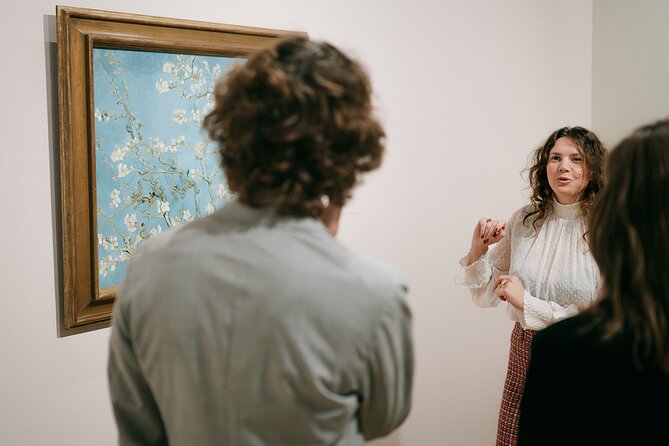
Vincent’s time in Arles brings the tour into one of the most dramatic parts of his life. The Yellow House, his hopes for an artistic community, and his turbulent relationship with Gauguin all become part of the explanation.
This section gives the bright paintings an emotional setting without treating every brushstroke as a symptom of illness. You see the excitement of Vincent’s artistic ambition, his desire for companionship, and the strain that followed.
The guide discusses how his relationships and mental difficulties appear alongside his genius and temper. That phrasing is important. It keeps the art from being explained only through a medical story, which can flatten the work into biography.
Paintings such as Sunflowers and The Yellow House carry more meaning when you understand what Vincent wanted them to represent. The works are not simply colorful pictures to place on a wall. They relate to his hopes for a new kind of artistic life and to his effort to build a visual language of his own.
Almond Blossom and Vincent’s final years
Almond Blossom offers a different mood from the heavier works associated with Vincent’s troubles. Its lighter subject and delicate branches show another side of his work, and it gives the guide a chance to discuss how his art could remain tender and observant even during difficult periods.
The tour does not stop at the image most people know. It follows Vincent’s final years, his mental health, and his death at 37. Theo died only a few months later, which makes the family story especially painful.
The subject matter can be emotional. One guide, Anke, is praised for telling these final chapters with a personal and heartfelt style, and the tour may feel particularly moving when the guide places the last paintings in context. If you prefer to keep museum visits strictly formal, you may find this approach more intense than expected.
Still, the emotional element is not used as a substitute for art explanation. The strongest guides combine personal history with discussion of technique, artistic periods, and individual works. That combination is why the final rooms can feel like part of a coherent story rather than a sad ending added for effect.
The guides make the difference
The guide is the most important variable in this experience. The advertised format calls for a Dutch art historian, and the guide team includes Titia, Lucien, Liz, Cécile, Lucy, Anke, Mercedes, and Genevieve.
Specific strengths associated with the guides include:
- Titia is praised for making Vincent’s life journey easy to follow and for bringing the paintings to life.
- Lucien is noted for clear explanations of history, technique, and Vincent’s emotional journey.
- Liz is especially effective at moving a small group through a crowded museum while focusing on key works.
- Cécile is described as personable, upbeat, and strong at answering questions.
- Lucy offers a thorough overview of Vincent’s life and art.
- Mercedes is praised for historical context, humor, and a pleasant manner.
- Genevieve is noted for taking time in each room and welcoming questions.
- Anke brings extra material and a warm storytelling style to the visit.
You cannot request that one particular guide will lead your tour from the information provided, so book for the format and subject first. The good news is that the repeated strengths are consistent: clear storytelling, art knowledge, enthusiasm, and patience with questions.
A small group also changes the tone. You are not just following a flag through crowded galleries. You can interact with the guide, ask for clarification, and spend a little longer on a work that matters to you.
How the 90 minutes feel inside the museum
Ninety minutes is enough for a focused introduction, not a complete survey of every room. The guide aims at major paintings and the turning points in Vincent’s career, which suits a first visit or a tight Amsterdam schedule.
That focus is also the tour’s limitation. One visitor preferred more time with the art and felt that the guide talked while the group remained in place. Another noted that the second floor was bypassed. This is a fair warning: you are buying interpretation and an efficient route, not a room-by-room examination of the whole building.
If you want to see every level, read every label, and linger at lesser-known works, plan to stay after the tour. The ticket lets you remain in the museum for as long as you want, so the best strategy is to treat the guided portion as your orientation and then explore independently.
I would reserve extra time if Van Gogh is a major reason for your Amsterdam visit. The tour gives you a framework, but the museum rewards a second pass at your own speed.
Is $168.09 good value?
At $168.09 per person, this is not a budget museum ticket. The cost reflects a small group, a museum admission ticket, and a private-feeling interpretation from an art specialist.
The value is strongest for three types of people:
- You have only one chance to visit the Van Gogh Museum and want a clear route through the essential works.
- You enjoy art more when someone explains the links between biography, technique, and historical period.
- You are willing to remain afterward and use the tour as a starting point for your own exploration.
The value is weaker if you already know Vincent’s life well, dislike guided commentary, or mainly want long, quiet stretches in front of individual paintings. In that case, a standard museum visit may suit you better.
The 4.9 out of 5 rating from 478 reviews and the 99 percent recommendation figure suggest a reliable experience, but those numbers do not remove the basic trade-off: you pay a premium for a short, personal guide-led visit.
Who should book this experience?
I would recommend it to first-time Van Gogh Museum visitors, couples, families with older children, and anyone who wants art explained without a lecture hall atmosphere. The group limit is especially useful if you have questions or if one member of your party is less familiar with art.
It also works well for a short Amsterdam stay. The guide takes you quickly to important works and explains the larger story, so you do not need to spend half a day figuring out where to begin.
I would hesitate to recommend it to repeat museum visitors who already understand Vincent’s main artistic periods. I would also think twice if your top priority is seeing every floor. The focused route may skip works you hoped to find, though you can stay after the tour to cover more ground.
The tour is offered in English. Service animals are allowed, it is near public transportation, and most people can participate. The activity has free cancellation up to 24 hours before the local start time. If you book three months ahead, your selected time is a preference rather than a guarantee, since the museum releases time slots only three months before the visit.
Should you book the Van Gogh Museum tour?
Book it if you want the museum to make sense quickly, value a guide who can connect art with biography, and appreciate a group capped at six. The strongest part is not simply seeing Sunflowers in person. It is understanding how works from Brabant, Paris, and Arles belong to one changing artistic life.
Skip it if $168.09 feels too high for 90 minutes or if you prefer a slow, self-directed visit. If you do book, keep time afterward for the second floor and any paintings the guide passes over. That combination, a focused introduction followed by your own wandering, gives you the best use of the ticket.
FAQ
How long does the guided tour last?
The guided portion lasts approximately 1 hour and 30 minutes.
What is the maximum group size?
The tour allows a maximum of six travelers, creating a small-group setting with more opportunity for questions.
Is museum admission included?
Yes. The admission ticket to the Van Gogh Museum is included.
Can I remain in the museum after the tour?
Yes. After the guided portion ends, you may stay in the museum for as long as you wish.
Where does the tour begin and end?
The meeting point is Paulus Potterstraat 7, 1071 CX Amsterdam. The tour ends at the Van Gogh Museum at Museumplein 6, 1071 DJ Amsterdam.
Is the tour available in English and can I cancel?
The tour is offered in English and uses a mobile ticket. You can cancel for a full refund up to 24 hours before the experience start time.
Just added around Amsterdam
- Small Group Tour to NP Hoge Veluwe (van Gogh) from Amsterdam★ 5.0 · 19 reviews
- Van Gogh and Rembrandt Immersive Experience Entry Amsterdam★ 4.0 · 2 reviews
- Van Gogh Museum Guided Visit Including Tickets★ 4.5 · 9 reviews
- Van Gogh Museum Tour excluding Entrance Tickets★ 5.0 · 16 reviews
- Van Gogh Museum with Audio Guide★ 3.5 · 80 reviews
- Van Gogh Museum Entry Ticket and Guided Tour★ 4.5 · 48 reviews
- Van Gogh Museum, Small Group Tour (incl timed entry tickets)★ 5.0 · 5 reviews
- Amsterdam: Explore the Van Gogh Museum & His Masterpieces★ 3.5 · 64 reviews
Art Museum Tours in Amsterdam, compared.

Van Gogh Museum Amsterdam Exclusive Tour w/ Reserved Entry
Read our review →
Rijksmuseum Amsterdam Small-Group Tour with Private Upgrade
Read our review →
Van Gogh Museum Tour Reserved Entry Semi Private
Read our review →
Rijksmuseum Entry Ticket and Canal Cruise Combo
Read our review →Browse the lists this tour appears in