
REVIEW · NEW YORK CITY
NYC: Museum of Modern Art (MoMA) Entry Ticket
MoMA gives you a rare chance to see Van Gogh’s The Starry Night, Monet’s Water Lilies, Picasso’s Les Demoiselles d’Avignon, and Warhol’s Campbell’s Soup Cans under one roof. The six-floor collection moves from late-19th-century European art to film, design, performance, and current work.
I like the skip-the-ticket-desk entry, which gets you straight inside with a barcoded voucher. I also like the free audio guide, daily film screenings, and art-making labs included with admission. The main drawback is simple: MoMA is large, popular, and easy to rush. On busy days, the famous paintings can be crowded, and six floors can feel like a lot of art at once.
Key points to know before you go
- Start on the fifth floor: This is where many of the most famous modern paintings are displayed, including Van Gogh and Picasso.
- Allow at least three hours: Two hours can cover the highlights, but the museum rewards a slower visit.
- Bring your own headphones: The multilingual audio guide works through your charged smartphone.
- Your ticket covers more than the permanent collection: Special exhibitions, daily films, and art-making labs are included.
- MoMA PS1 is included later: Your admission also gives you entry to MoMA PS1 for up to 14 days after your visit.
- Children 16 and under enter free: Families are welcome, and the museum provides material that can help younger visitors engage with the art.
Why MoMA earns a place in your New York plans
MoMA is not just a room full of famous paintings. It is a compact story of how art changed from the 1880s to the present day.
You can begin with painters such as Monet, Gauguin, Matisse, Van Gogh, Picasso, Dalí, and Pollock. Then the collection carries you toward Warhol, contemporary painting, photography, film, design, and performance art. That range is the real strength of the museum. You are not asked to like every work. You are given a chance to see how artists repeatedly changed the rules.
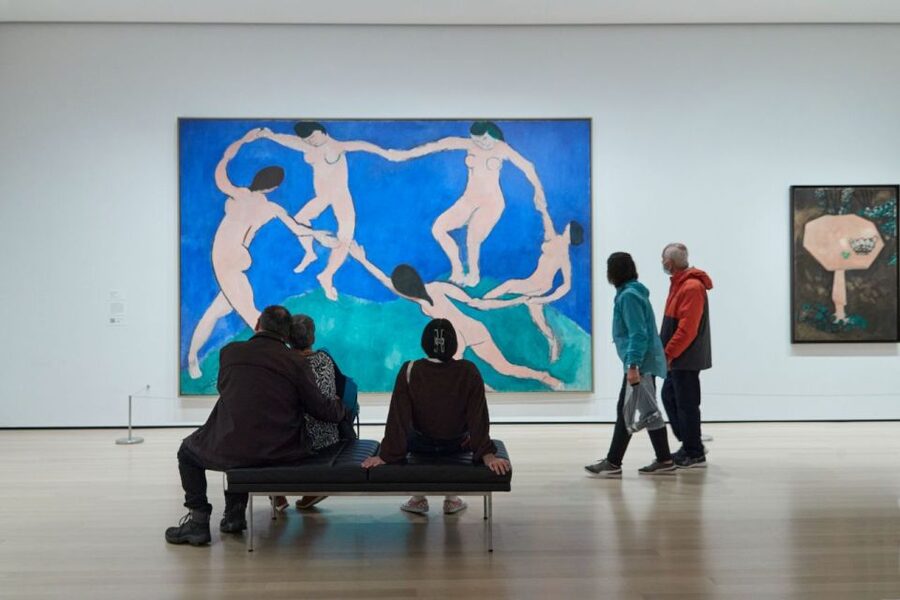
The famous names provide an easy entry point. If modern art feels confusing, start with a painting you already know. The Starry Night gives you an emotional anchor. Matisse’s Dance (I) offers a bold lesson in color and movement. Warhol’s soup cans turn an everyday supermarket item into a question about advertising, repetition, and celebrity.
From there, I suggest giving the less familiar works some time. Elizabeth Murray, Cindy Sherman, Ai Weiwei, and other modern artists help show that MoMA is not simply a hall of old masterpieces. The museum keeps asking what art can be, and that can be exciting, though some visitors may prefer the historic collection to the newer installations.
More Art Museum Tours in New York City
- NYC: Guggenheim Museum Entry Ticket
★ 4.4 · 2,201 reviews - NYC: MoMA Before-Hours Tour with Art Expert
★ 4.8 · 418 reviews - Chelsea Contemporary Art Tour with NYC Professional Art Critic
★ 5.0 · 62 reviews
Entering at 11 West 53rd Street
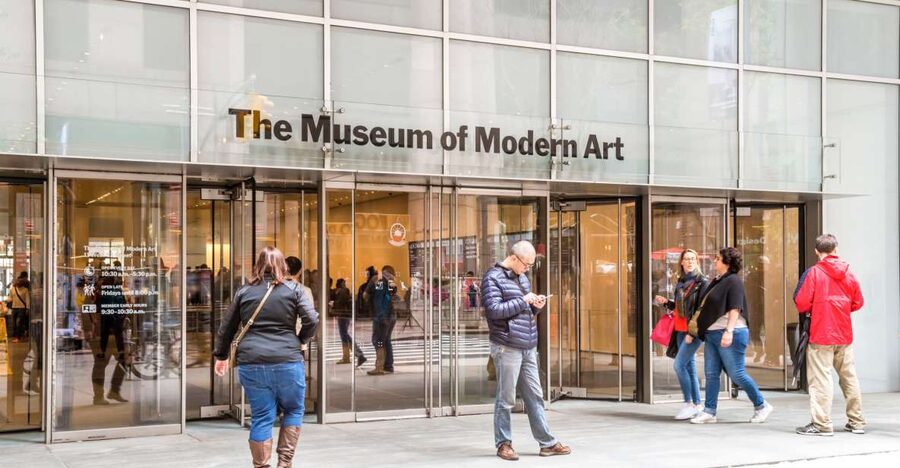
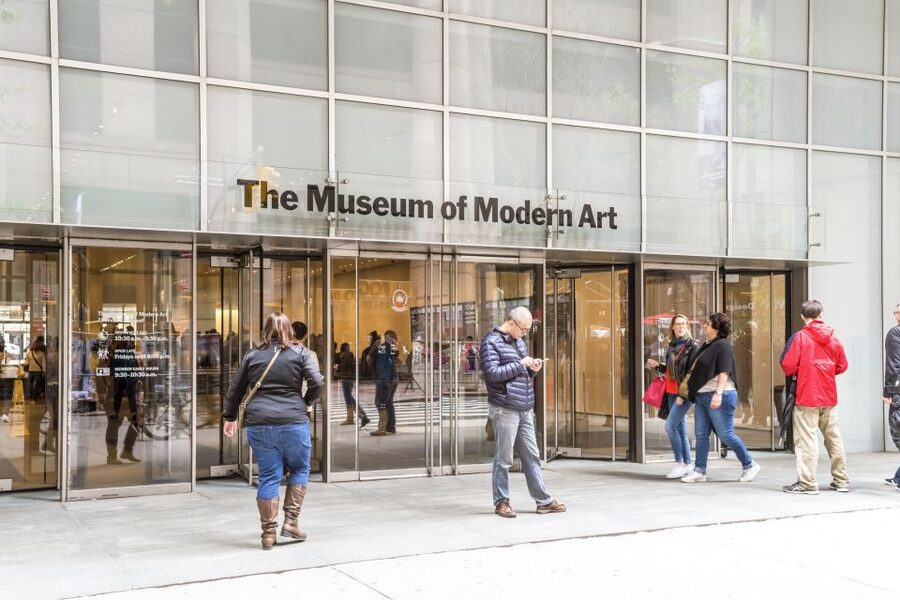
MoMA is at 11 West 53rd Street in Midtown Manhattan. With a pre-booked ticket, you present your barcoded voucher at one of the gallery entry points. You do not need to stop at the ticket desk, which is a useful advantage when you have a full day planned in Midtown.
The ticket is valid for one day, not for a short timed visit. That gives you room to leave for lunch or a walk and still treat the museum as the main event of your day, though the entry details should be followed carefully if you plan to come and go.
The museum is open daily from 10:30 AM to 5:30 PM, with later hours on Friday until 8:30 PM. Last entry is one hour before closing. I would avoid arriving late in the afternoon if you want to see the main collection. The museum is too large for a quick final-hour visit.
Admission costs $30 per person. That is not a cheap museum ticket, but it includes the permanent collection, all special exhibitions, free WiFi, audio material, daily films, and art-making labs. It also includes admission to MoMA PS1 for up to 14 days after your MoMA visit, which improves the value if your New York schedule allows another museum stop.
A practical route through six floors
MoMA’s galleries can feel confusing at first. One visitor found the rooms difficult to navigate, while another recommended starting high and working downward. I agree with the second approach.
Start on the fifth floor if your main goal is the great modern paintings. From there, work down in roughly chronological order. This makes the development of modern art easier to follow, and it saves you from using your best energy on the lower floors before reaching the works you came to see.
The exact displays can change. Not every work owned by MoMA is always on view, and exhibitions rotate. That means you should treat the famous checklist as a guide, not a guarantee that every named painting will be displayed during your visit.
Still, the fifth floor is the natural place to begin for many people. You might see Van Gogh, Monet, Matisse, Gauguin, Picasso, and other major figures grouped in a way that makes the connections between them easier to notice.
The fourth floor brings you closer to later modern art, including Warhol’s Campbell’s Soup Cans. If you are interested in Cubism, Surrealism, or American postwar art, allow more time here. Pollock and Dalí are among the names associated with the collection, but the pleasure comes from seeing how different their approaches can be.
The remaining floors may include contemporary art, photography, design, film, and temporary exhibitions. These galleries are where the museum becomes less predictable. Some works may make immediate sense. Others may leave you cold. That is part of the MoMA experience, but it is also why you should not plan to race through every room.
The masterpieces people come to see
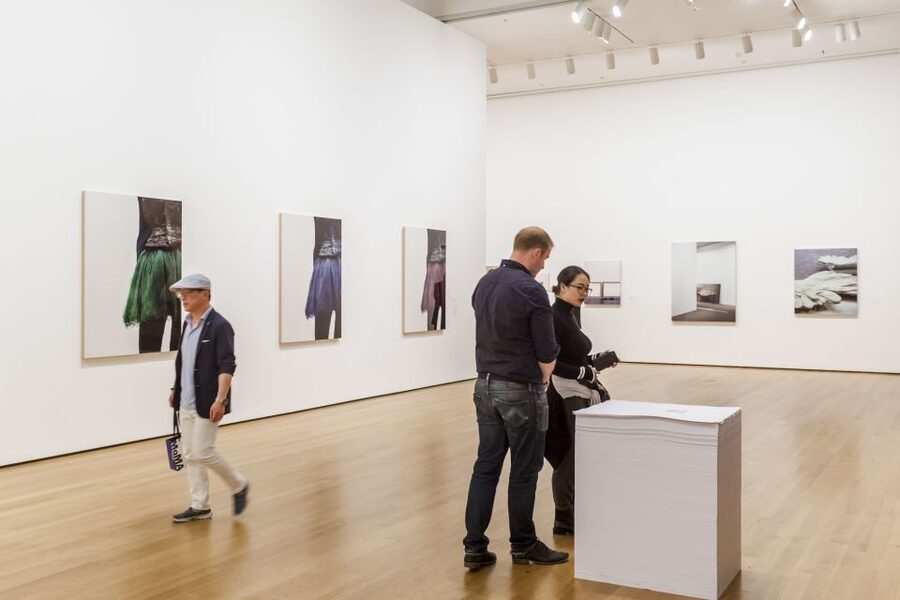
The most emotional moments at MoMA often come from seeing a familiar image in person. Reproductions flatten paintings into screens and postcards. In the gallery, scale, brushwork, color, and surface become part of the experience.
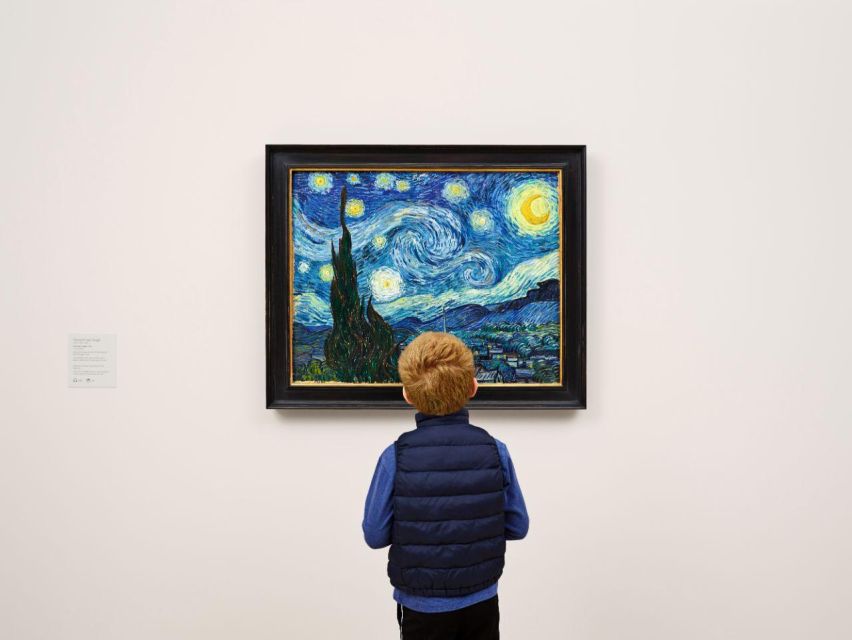
Van Gogh’s The Starry Night is the major draw for many first-time visitors. It can be surrounded by people, so do not expect a quiet private encounter. Even so, give yourself a few minutes to look past the famous status and notice the restless sky, strong outlines, and swirling movement.
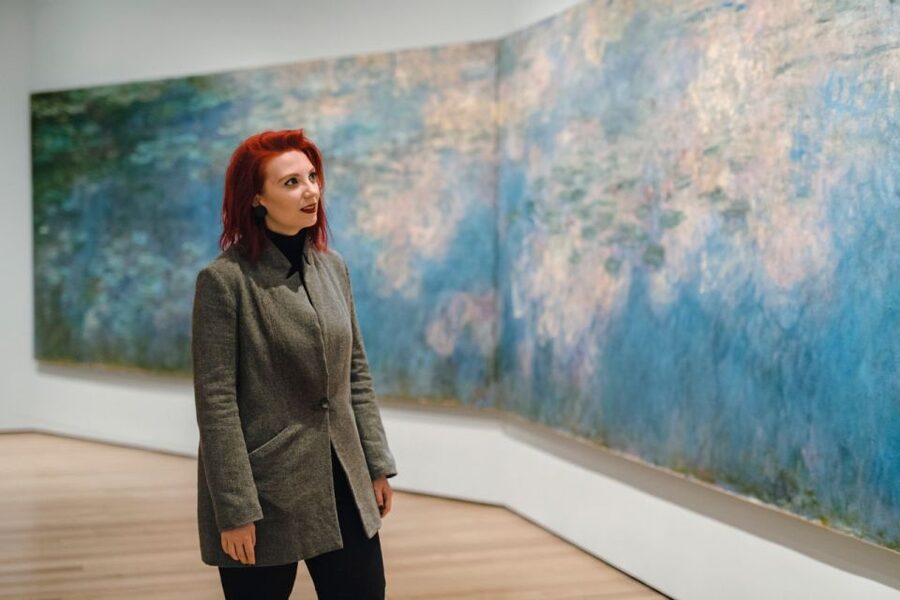
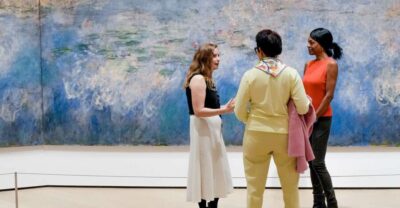
Monet’s Water Lilies offers a different mood. The work rewards patience rather than a quick photograph. Matisse’s Dance (I) is another essential stop, especially if you enjoy bold shapes and simplified figures.
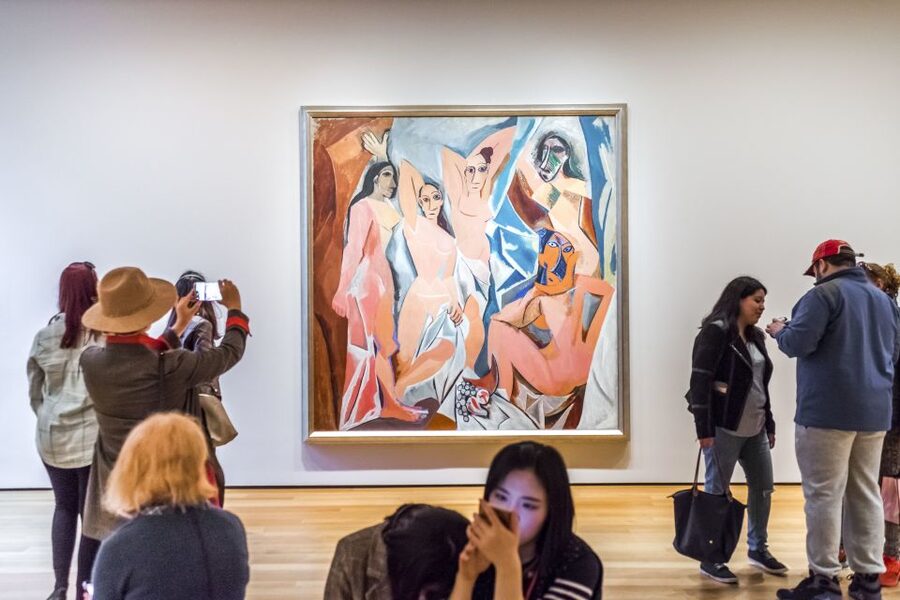
Picasso’s Les Demoiselles d’Avignon is a key work for understanding the break with traditional painting. It can look harsh or strange at first. That is precisely why it matters. Picasso was not trying to make a comfortable scene. He was testing how a body, a face, and space could be shown.
Warhol’s Campbell’s Soup Cans works differently. Its repeated cans are familiar, flat, and almost ordinary. The surprise is that such a simple subject became a major statement about mass production and popular culture.
Allow time for the smaller works near the famous ones. The blockbuster paintings may be the reason you buy the ticket, but the surrounding pieces often explain what made them radical.
More modern and contemporary art in New York City:
- NYC Combo: Statue of Liberty Cruise, St Patrick’s Cathedral & Moma entrance
★ 4.0 · 8 reviews - Tribeca Contemporary Art Tour with NYC Art Critic
★ 5.0 · 5 reviews - American Museum of Natural History and MOMA Combo Tickets
★ 4.5 · 3 reviews - Skip the Line Tickets for MoMA and Whitney Museum Combo
★ 3.0 · 2 reviews
Contemporary galleries, film, and design
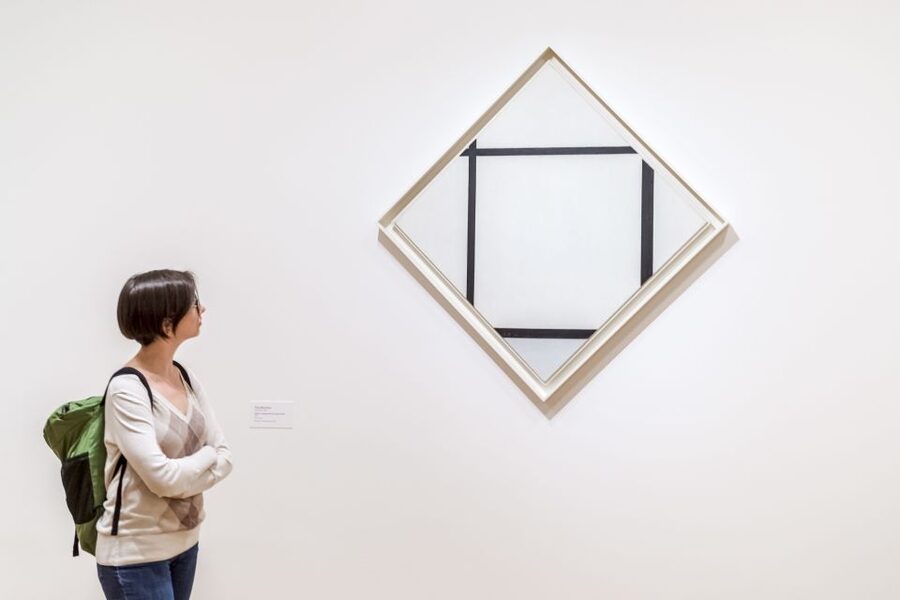
MoMA is at its best when you accept that modern art will not all feel familiar. The collection includes current artists such as Elizabeth Murray, Cindy Sherman, and Ai Weiwei, among many others. Their work shifts the focus from painting alone toward identity, politics, photography, objects, and public life.
One visitor preferred the older masters and found some contemporary work less emotionally powerful. That is a fair reaction. You do not need to pretend that every installation works for you. Instead, use the newer galleries to see what questions artists are asking now.
Daily film screenings are included with admission. The collection’s connection to cinema is important because MoMA treats film as part of modern art rather than as a separate afterthought. A screening can also give your feet a break after several floors of galleries.
Art-making labs are included as well. These can be especially useful for families, since children do not have to spend the whole visit standing quietly in front of paintings. Children 16 and under enter free, and the museum welcomes families and younger visitors.
The current and upcoming exhibition schedule adds another reason to check dates before booking. The information provided lists Crafting Modernity: Design in Latin America 1940-1980 through September 22 and Joan Jonas: Good Night Good Morning through July 6, with Käthe Kollwitz scheduled from March 31 to July 20 and LaToya Ruby Frazier from May 12 to September 7. Exhibition dates change, so confirm the schedule for your visit.
Using the free audio guide on your phone
The audio guide is available through the MoMA app or mobile site, with Spanish, Chinese, English, French, German, Italian, Japanese, and Portuguese options. Free WiFi is available throughout the museum.
Bring a charged smartphone and headphones. This is one of those small details that can shape the whole visit. Without headphones, you may need to hold your phone to your ear, and your battery may disappear faster than expected.
The audio material can add useful context to works that seem difficult at first. It is particularly helpful if you are new to modern art and want more than a short wall label.
There is one practical warning. QR codes and phone access may not work perfectly in every gallery or on every device. Give yourself a few minutes to set up the app or mobile site near the beginning. If the audio does not load, do not let it spoil the visit. The galleries can be enjoyed without it, and the museum’s free WiFi may help you reconnect.
This is a self-guided visit, not a tour led by a museum guide. A separate guided experience may provide more storytelling and back-and-forth discussion, but this ticket gives you control over pace, language, and subject.
How long should you stay?
Two hours is enough for a focused visit to the fifth and fourth floors. You can see many of the best-known paintings and leave with a clear sense of MoMA.
Three hours is a better target for most people. It gives you time for the major galleries, a temporary exhibition, a pause, and a few contemporary rooms without turning the day into a march.
Four hours or more makes sense if you want films, design, special exhibitions, and a meal. The collection is large enough that you cannot absorb everything in one pass. Several visitors found that time moved quickly, which is a polite way of saying that MoMA can eat an entire afternoon.
Do not make the mistake of measuring success by the number of floors completed. A focused visit to two floors can be more satisfying than a tired sprint through all six.
Crowds, comfort, and the sculpture garden
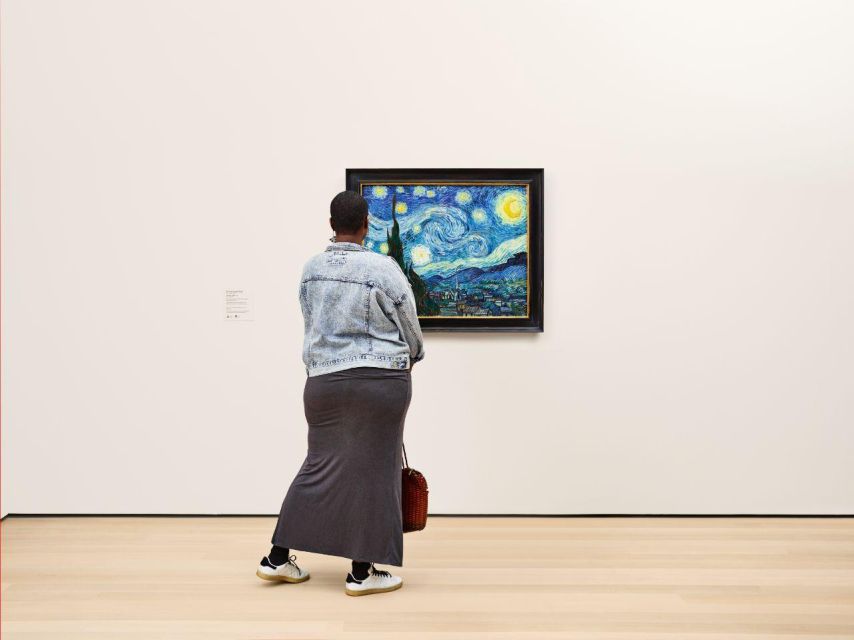
MoMA can become crowded around the best-known paintings. This affects photographs, personal space, and the simple pleasure of standing still. If you want to study The Starry Night or another major work, arrive early in the day or use the later Friday hours with care. The evening schedule gives you extra time, but popular periods can still feel busy.
The building is clean, airy, and well laid out overall, though finding the best route between galleries is not always obvious. Follow the floor plan and ask staff if you lose your way. Staff members are described as friendly and helpful, and their suggestion to start on the sixth or fifth floor is practical.
End in the outdoor sculpture garden if it is open during your visit. It gives you space to pause after the galleries and think about what you have seen. The garden is not just a photo stop. It changes the pace of the day and gives your eyes a rest from dense walls of art.
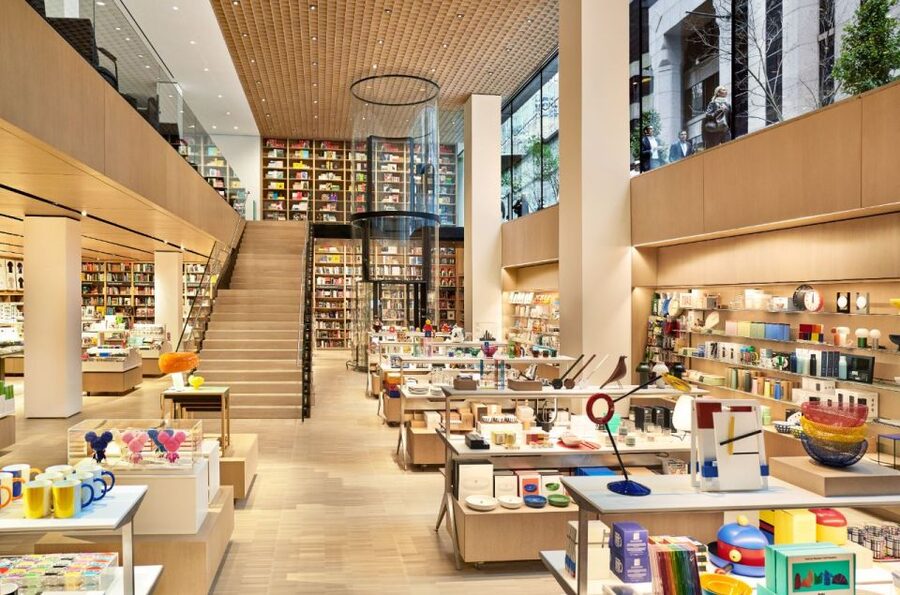
Food and shopping are also part of the museum experience. MoMA has three restaurants, including The Modern, which has two Michelin stars. The MoMA Design Store sells books, design objects, jewelry, furniture, clothing, and other items. The shop is tempting, so leave room in your budget if you enjoy art-related souvenirs.
Food and drinks are not allowed in the galleries, and luggage or large bags are not allowed. Video recording is prohibited. Pack lightly and bring only what you need.
Who will get the most from this ticket?
This ticket suits first-time MoMA visitors who want the freedom to explore without joining a group. It also works well for art lovers who already know which artists they want to see and for families who can use the film screenings and art-making labs as breaks.
It is a good choice for anyone staying near Midtown, since the museum fits easily with Rockefeller Center, Grand Central, and other central New York sights. The one-day validity gives you flexibility, though you should still reserve enough time for the galleries.
You may enjoy another museum more if you strongly prefer ancient, medieval, or traditional European art. One visitor who favored classical art found modern art less natural. MoMA can still be worthwhile, but its main subject is experimentation, not old-master painting.
Booking, cancellation, and accessibility
You can cancel up to 24 hours in advance for a full refund, and the reserve-now, pay-later option keeps your plans flexible. The museum is wheelchair accessible.
The important preparation is simple: bring a charged smartphone and headphones, keep your voucher ready, and avoid large bags. Since entry is at 11 West 53rd Street and does not require a stop at the ticket desk, the process should be straightforward.
Should you book MoMA?
Yes, if you want to see major works by Van Gogh, Monet, Picasso, Matisse, Warhol, Dalí, and Pollock in one Midtown museum. The $30 price is reasonable when you use the included exhibitions, films, art-making labs, audio guide, and later MoMA PS1 admission.
Plan your route before you arrive. Start on the fifth floor, work downward, and allow three hours if you can. Go early if famous paintings are your priority, and do not feel guilty about skipping a gallery that does not speak to you.
Book this experience if you want a flexible, self-guided art day with plenty of famous names and a strong modern collection. Skip it only if your interest in modern and contemporary art is very limited, or if you have time for just a rushed hour. MoMA rewards attention, and New York gives you plenty of distractions.
FAQ
Where is the Museum of Modern Art located?
MoMA is at 11 West 53rd Street in Midtown Manhattan, New York.
What does the $30 ticket include?
The ticket includes admission to MoMA, the permanent collection, special exhibitions, free WiFi, and a downloadable multilingual audio guide. Daily film screenings and art-making labs are also included.
Do I need to visit the ticket desk?
No. Present your barcoded voucher to museum staff at one of the gallery entry points. You do not need to check in at the ticket desk.
How long is the ticket valid?
The ticket is valid for one day. Check availability when booking for the available starting times.
What are MoMA’s opening hours?
The museum is open daily from 10:30 AM to 5:30 PM. On Fridays, it stays open until 8:30 PM. Last entry is one hour before closing.
Which famous artworks can I see?
The collection includes works such as Van Gogh’s The Starry Night, Monet’s Water Lilies, Picasso’s Les Demoiselles d’Avignon, Matisse’s Dance (I), and Warhol’s Campbell’s Soup Cans. Displays can change, so individual works are not guaranteed to be on view.
Is the audio guide available in different languages?
Yes. The audio guide is available in Spanish, Chinese, English, French, German, Italian, Japanese, and Portuguese.
What should I bring?
Bring headphones and a charged smartphone for the audio guide. Large bags and luggage are not allowed, and food and drinks are not permitted in the museum.
Can children and wheelchair users visit?
Yes. Families and children are welcome, and children 16 and under enter free. The museum is wheelchair accessible.
Just added around New York City
- NYC Combo: Statue of Liberty Cruise, St Patrick’s Cathedral & Moma entrance★ 4.0 · 8 reviews
- New York City Art Gallery Tour★ 5.0 · 7 reviews
- Skip the Line Tickets for MoMA and Whitney Museum Combo★ 3.0 · 2 reviews
- Chelsea Galleries and High Line; Art, Architecture and History★ 5.0 · 14 reviews
- Visit The Guggenheim Museum & 3h Manhattan Walking Tour★ 4.5 · 3 reviews
- Tribeca Contemporary Art Tour with NYC Art Critic★ 5.0 · 5 reviews
- American Museum of Natural History and MOMA Combo Tickets★ 4.5 · 3 reviews
- Chelsea Architecture and Art Tour with Award Winning NYC Guide★ 5.0 · 9 reviews
Art Museum Tours in New York City, compared.
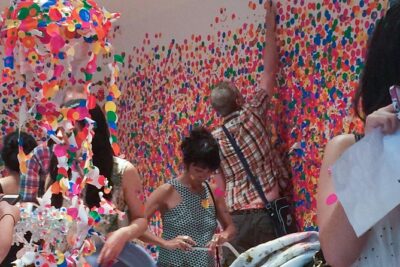
Chelsea Contemporary Art Tour with NYC Professional Art Critic
Read our review →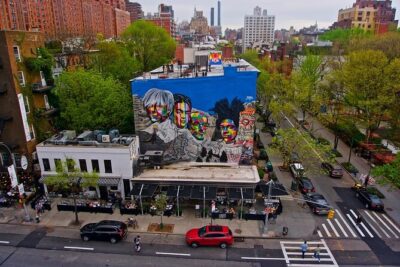
Chelsea Galleries and High Line; Art, Architecture and History
Read our review →
Chelsea Architecture and Art Tour with Award Winning NYC Guide
Read our review →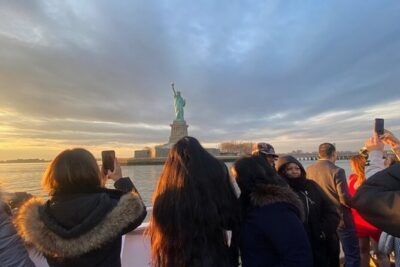
NYC Combo: Statue of Liberty Cruise, St Patrick’s Cathedral & Moma entrance
Read our review →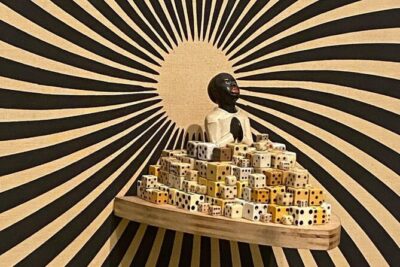
Tribeca Contemporary Art Tour with NYC Art Critic
Read our review →Browse the lists this tour appears in