
REVIEW · MADRID
Prado for All: Engaging, Insightful Tour with an Art Lover
The best reason to take this Prado tour is its clear path through centuries of art. Rather than wander from one famous canvas to another, you follow the changing ideas of European and Spanish painting, from Bosch and Raphael to Titian, El Greco, Velázquez, and Goya.
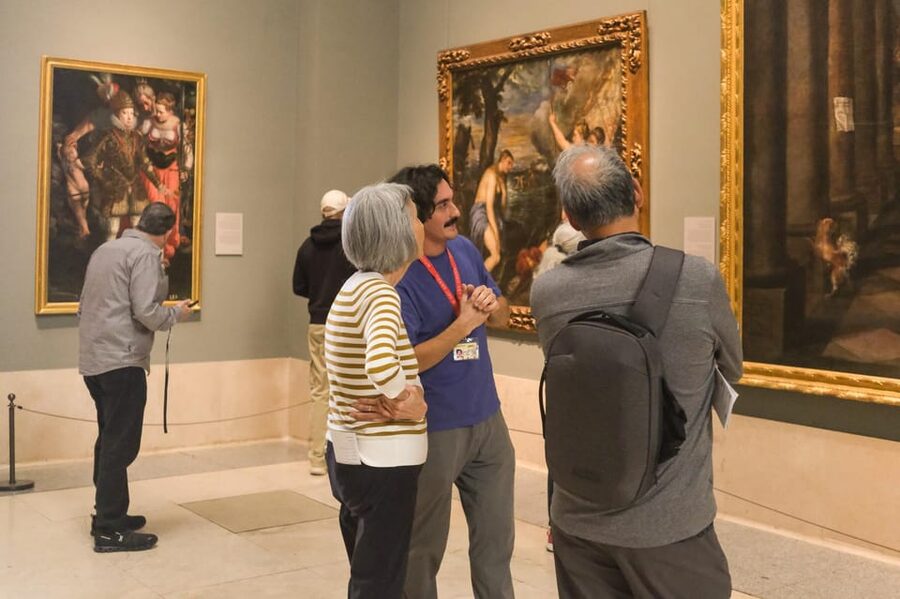
I like the small group of no more than seven people, which gives Joaquín room to explain details and answer questions. I also like the skip-the-line entry, especially when your Madrid schedule is tight and you want your two and a half hours inside the museum to count.
The main consideration is pace. The Prado is enormous, and this tour gives you a guided selection rather than time to browse every room. If you want a quiet, unhurried look at dozens of works on your own, you may need to return separately.
Key points before you book
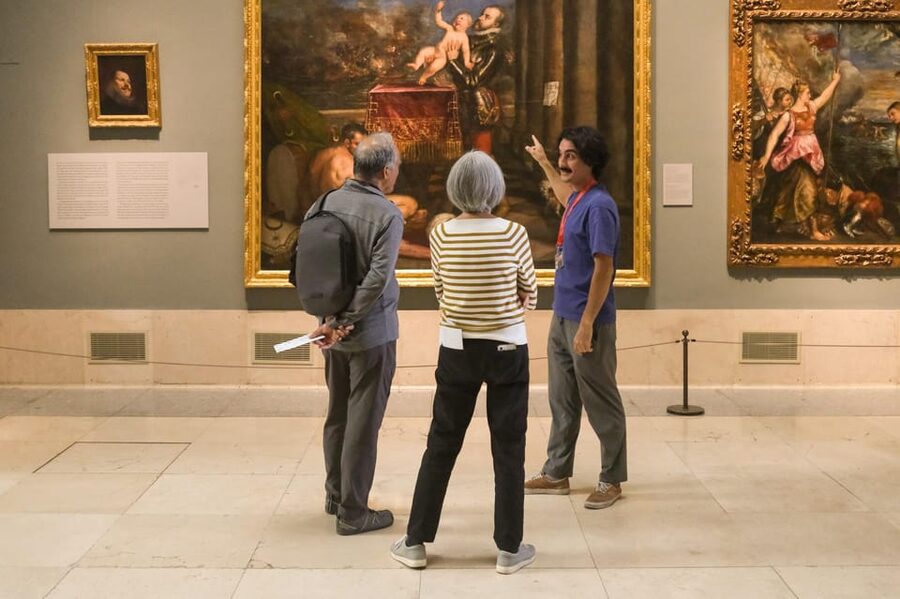
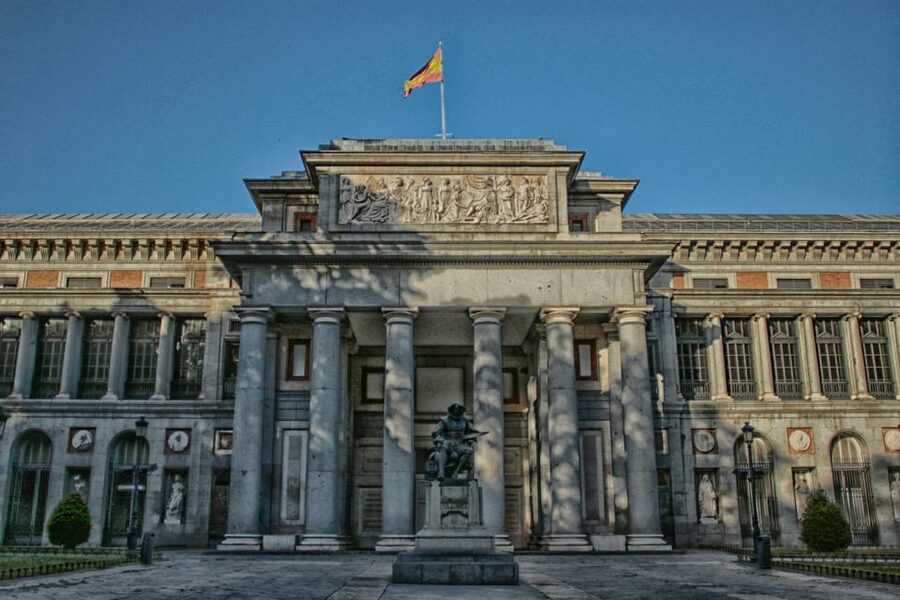
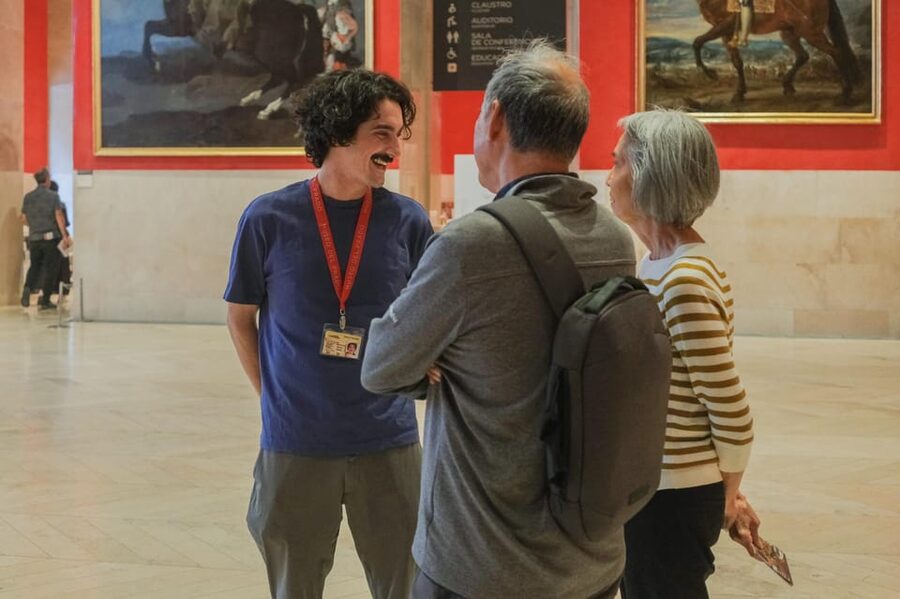
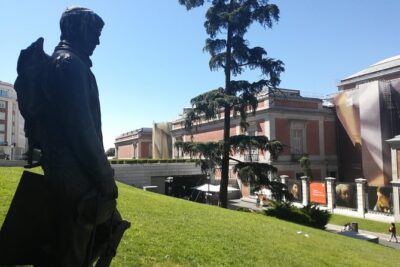
- Joaquín leads the tour: Meet him by the Goya statue in front of the Prado ticket office. He has dark hair and a mustache, as shown in the tour photos.
- A clear art-history route: The visit covers the development of art from the 15th through the 19th century.
- Famous names, carefully connected: Bosch, Raphael, Titian, El Greco, Velázquez, and Goya are presented as part of an artistic chain, not as isolated stars.
- Small groups matter: With up to seven participants, the discussion can be more personal than a large headset tour.
- Useful for beginners and art lovers: Joaquín explains composition, Spanish history, artists’ lives, and unusual details in an accessible way.
- Plan around museum rules: Drinks, backpacks, umbrellas, and photography inside are not allowed.
Meeting Goya before entering the Prado
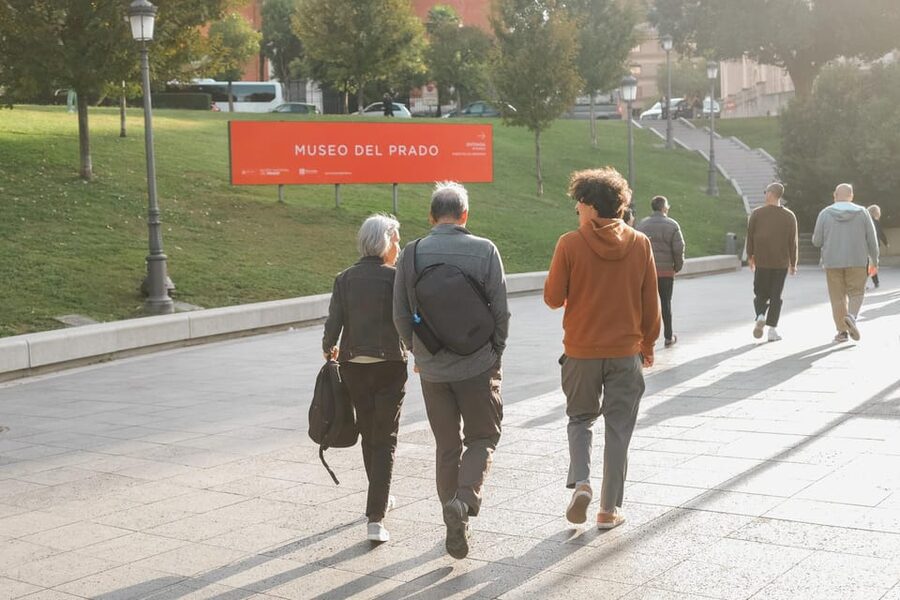
The tour begins at the monument to Goya, directly in front of the Prado ticket office. This is a practical meeting point, but it also sets the subject nicely: Goya is one of the artists you will study, and his work marks an important later chapter in Spanish art.
Look for Joaquín by the statue. The meeting instructions identify him by his dark hair and mustache, and his name is also provided with your booking information. If you need help before or after the tour, you can contact him through WhatsApp at the number supplied with the voucher.
There is no hotel pickup or drop-off. You make your own way to the museum, so leave enough time to find the statue and gather your group. The tour enters with a skip-the-line ticket, allowing you to avoid the regular ticket queue and begin the museum visit more efficiently.
That does not mean the Prado becomes a private building. You are still visiting one of Madrid’s major museums, so the rooms may feel busy. The benefit is that the entry process is handled as part of the experience, rather than taking up valuable time at the start.
More Art Museum Tours in Madrid
- Madrid: Prado Museum Entry Ticket
★ 4.6 · 20,699 reviews - Madrid: Small Group of Prado Museum Tour & Optional Tapas
★ 4.6 · 2,437 reviews - Madrid: Prado Museum Guided Tour with Skip-the-Line Ticket
★ 4.5 · 2,018 reviews
Why a guided route helps inside the Prado
The Prado can be hard to approach without a plan. It contains far more art than you can sensibly see in one visit, and famous paintings compete for your attention at every turn. A guide gives you a reason to pause at certain works and a framework for understanding why they matter.
Joaquín’s route follows the evolution of art from the 15th to the 19th century. That broad sweep helps you notice changes in composition, color, religious storytelling, portraiture, and the role of the artist. You are not simply ticking off famous names. You are looking at how one generation influenced another.
This is particularly helpful if you know little about art. You do not need a background in painting or Spanish history to follow the discussion. The tour is designed to explain what you are seeing without assuming that you already recognize every technique or historical reference.
If you already enjoy art, the value comes from the added layers. Joaquín discusses personal stories, visual choices, historical context, and small details that can be easy to miss when you walk through the museum alone. The goal is not to turn the Prado into a classroom. It is to make the paintings easier to read and more rewarding to remember.
From Bosch and Raphael to Titian
The early part of the route introduces major European influences. Bosch gives you a chance to consider imagination, symbolism, and crowded visual scenes. His paintings reward patient looking, since unusual figures and small actions can carry as much meaning as the main subject.
Raphael represents a different set of ideals, including balance, order, and controlled composition. Comparing an artist such as Raphael with Bosch helps you see that art history is not a straight march toward improvement. Different painters valued different forms of beauty, drama, and meaning.
Titian adds another important stage in the story. His work helps explain the importance of color, surface, and the treatment of the human figure. Joaquín uses artists like these to show how painters developed their own solutions while responding to earlier masters.
For you, the practical benefit is simple: the paintings become easier to compare. Instead of asking only if you like a picture, you can begin asking how it is built, what your eye sees first, and how the artist directs your attention.
Spanish identity through El Greco and Velázquez
The tour then turns more firmly toward Spanish art. El Greco is an important stop because his expressive style does not fit neatly into a calm, naturalistic tradition. His elongated forms and intense spiritual feeling give you a useful contrast with artists who sought more ordinary physical realism.
Joaquín places these painters in their historical setting, helping you understand that style is tied to more than personal taste. Religious life, royal power, cultural exchange, and the artist’s own ambitions all shaped the paintings you see.
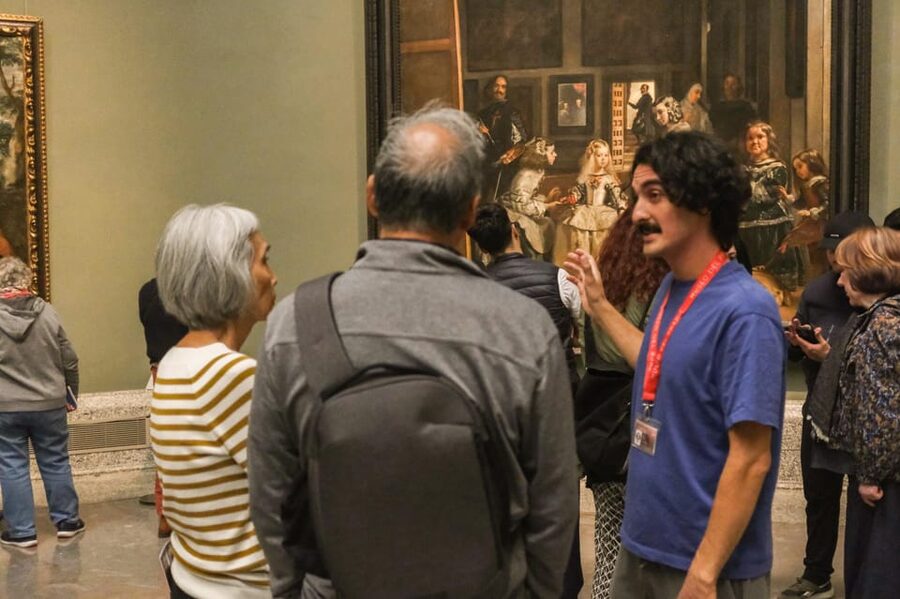
Velázquez is one of the major reasons many people visit the Prado, and he receives particular attention on this tour. His work rewards close looking because apparently simple scenes can contain complex relationships between figures, viewers, and the act of painting itself.
A good guide can point out details that you might otherwise pass without noticing. Joaquín’s explanations focus on composition and masterful technique, along with the stories connected to particular works. That combination is useful for families, too. Teenagers may not want a long lecture about art, but a sharp story or visual puzzle can hold their attention.
The tour does not promise to cover every Velázquez painting. Its strength is selection. You spend time on key works and learn how to look at them, rather than rushing through a checklist.
More Prado tours and tickets:
- Madrid: Prado Museum Guided Tour With Fast Access
★ 4.8 · 1,785 reviews - Prado Museum Small Group Tour with Skip the Line Ticket
★ 5.0 · 1,738 reviews - Royal Palace & Prado Museum Skip the Line Guided Tour
★ 4.5 · 1,347 reviews - Madrid: Prado Museum Ticket with In-App Audio Guide
★ 3.6 · 1,154 reviews
Goya and the final chapter of the route
Goya brings the story into the 18th and 19th centuries and gives the tour a strong closing point. His work can be approached through portraiture, political power, personal expression, and the darker side of human behavior.
Because you meet beside his statue, Goya frames the experience from the beginning. By the time you reach his work inside the museum, you have already seen several artistic traditions that help explain why his paintings feel so different.
The guide also connects artists such as Bosch, Velázquez, and Goya with later modern painters. This is one of the more useful ideas in the tour. The Prado is not only a place to admire old masterpieces. It is also a place to see how later artists found new possibilities in earlier work.
You may not leave with a complete survey of modern art, and that is not the purpose. Instead, you gain a clearer sense of how artistic influence works. A painting can shape later art through its subject, brushwork, structure, mood, or refusal to follow accepted rules.
Joaquín’s approach to explaining art
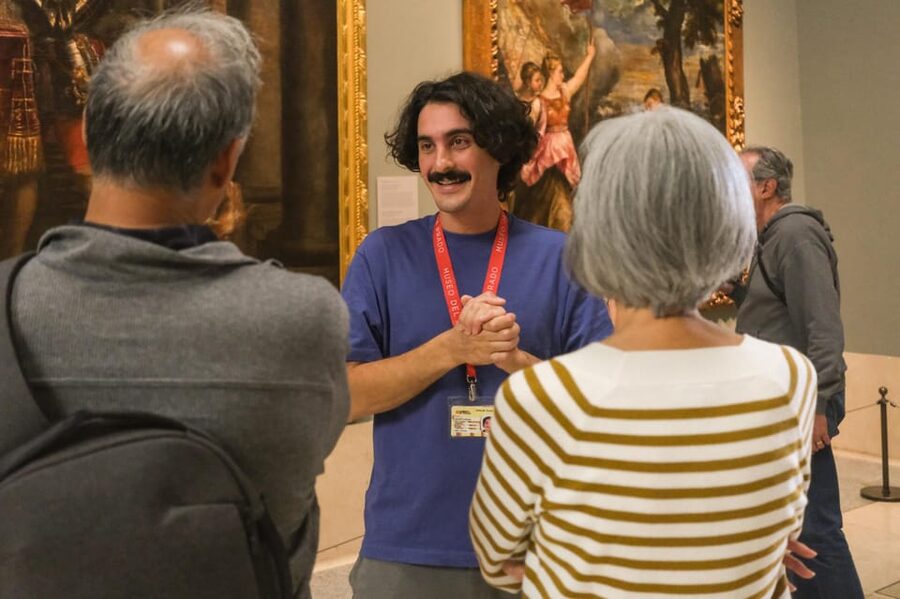
Joaquín’s teaching style is a central part of the experience. He presents art history with enthusiasm and uses stories and facts to keep the discussion moving. The tone is intended to be engaging rather than formal, which matters in a museum where too much technical language can quickly wear you out.
He explains composition techniques in plain terms. You may look at how figures are arranged, where light falls, how a painter controls your eye, or how a small object changes the meaning of a scene. These observations give you tools you can use on other paintings after the tour ends.
He also brings in artists’ personal lives and Spanish history. Those details help put the works into human context, but the tour does not rely only on biography. The strongest part is the link between the story and what you can actually see on the canvas.
The small-group format supports this approach. Seven people or fewer is still a group, but it is small enough for questions and conversation. A private option is also available, which may suit families or friends who want a more tailored discussion.
The advertised languages are English and French. If you book in one of those languages, you can expect the guide to explain the paintings directly rather than relying on a written app or audio device.
How long the two-and-a-half hours feel
The scheduled duration is two and a half hours. That is long enough to create a real narrative, but short enough to fit into a full day of sightseeing in Madrid.
A museum tour of this length works best when you accept that you will see a carefully chosen portion of the Prado. You are paying for guidance and interpretation, not a room-by-room survey.
The time may pass quickly because the discussion moves between paintings, artists, and historical connections. Some people may find that they want more time afterward at a particular work. If that sounds like you, note the names of the paintings or rooms that interest you and return independently.
One practical point: the museum does not allow drinks, backpacks, umbrellas, or photography inside. Pack lightly and plan around those restrictions. You should not count on taking pictures of the paintings as reminders, so listen closely or make notes afterward if you want to remember specific works.
The tour is listed as wheelchair accessible. If accessibility is especially important for your visit, it is sensible to confirm the current arrangements with Joaquín before arriving, using the WhatsApp contact provided with your voucher.
What the $75 price includes
The cost is $75 per person. That includes the Prado admission ticket, skip-the-line entry, and two and a half hours with a certified guide.
The value depends on how you use museums. If you already know the Prado well and prefer to choose every room yourself, the ticket alone may be enough. You will pay more for the structure and personal explanation of a guided visit.
For a first Prado visit, the price is easier to justify. The museum can be overwhelming, and a focused route helps you spend your time on major works rather than wandering without a plan. The small group also gives the experience a more personal feel than a large tour.
The cost does not include transportation, food, hotel pickup, or drop-off. Since the meeting point is at the museum itself, you are responsible for getting there. The booking also offers free cancellation up to 24 hours in advance and a reserve-now, pay-later option, which gives you some flexibility when planning a Madrid itinerary.
Who will get the most from this Prado visit
I would recommend this tour to first-time Prado visitors who want context instead of a quick list of famous paintings. It is also a good fit for couples, families, and small groups who prefer direct conversation with a guide.
Beginners should not feel intimidated. The explanations are designed to be approachable, and you can enjoy the works without knowing art-history terms in advance.
Art lovers can benefit too, especially if you have visited the Prado before but want to understand how its major painters connect. Joaquín’s focus on anecdotes, technique, and artistic influence offers more than a basic introduction.
Families with older children or teenagers may find the small group helpful. A guide who points out striking details and tells memorable stories can make the museum feel less like a silent march through galleries.
This may not suit you if your top priority is independent exploration. The route has a clear focus, and the group needs to keep moving. You also may want to avoid it if you dislike fixed meeting times or prefer to spend an entire morning with one painting.
Should you book Prado for All?
Book this tour if you want the Prado to make sense, not simply to see it. Joaquín’s strength is the connection between art, history, technique, and story, while the group size keeps the experience personal.
The best fit is a first or second Prado visit, particularly for anyone who wants help choosing what deserves attention. At $75, it is a sensible spend if guided interpretation will make the museum more memorable for you.
Skip it if you already have a detailed personal plan and want complete freedom to linger. Otherwise, the combination of skip-the-line entry, a seven-person maximum, and a carefully linked route through Bosch, Raphael, Titian, El Greco, Velázquez, and Goya makes this a strong way to meet Madrid’s great art collection.
FAQ
Where does the Prado tour meet?
Meet Joaquín at the monument to Goya, directly in front of the Prado Museum ticket office.
How long does the tour last?
The guided visit lasts two and a half hours.
What languages are available?
The tour is offered in English and French.
How many people can join the small group?
The small-group tour accepts up to seven participants. Private options are also available.
Is the Prado ticket included?
Yes. The price includes a skip-the-line ticket to the Prado Museum and the guided visit.
Can I take photographs inside the museum?
No. Photography inside the Prado is not allowed. Drinks, backpacks, and umbrellas are also not allowed.
Just added around Madrid
- Retiro Park & Prado Museum Private Tour★ 5.0 · 7 reviews
- Paseo del Arte: Prado, Reina Sofía and Thyssen Museum★ 5.0 · 6 reviews
- Prado, Thyssen-Bornemisza or Reina Sofia Museum Private Tour★ 5.0 · 4 reviews
- Italian Prado Museum Tour | Maximum 7 people | No line★ 5.0 · 13 reviews
- Prado Museum Without the Crowds-Exclusive Guided Pre Opening Tour★ 5.0 · 137 reviews
- Madrid Highlights Private Tour with Prado Museum & Royal Palace★ 4.5 · 6 reviews
- Private Tour of Prado Museum in Madrid★ 4.5 · 28 reviews
- Prado Museum Guided Tour – In Spanish – 7 people per tour maximum★ 5.0 · 67 reviews
Art Museum Tours in Madrid, compared.
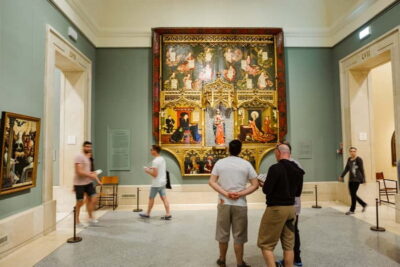

Small Group of Prado Museum Tour & Optional Tapas
Read our review →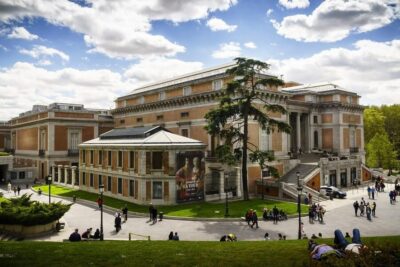
Prado Museum Guided Tour with Skip-the-Line Ticket
Read our review →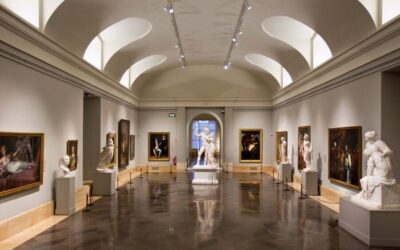
Prado Museum Small Group Tour with Skip the Line Ticket
Read our review →
Royal Palace & Prado Museum Skip the Line Guided Tour
Read our review →

Prado Museum Guided Tour with Skip-the-Line Ticket
Read our review →Browse the lists this tour appears in